Vacuum Gauge

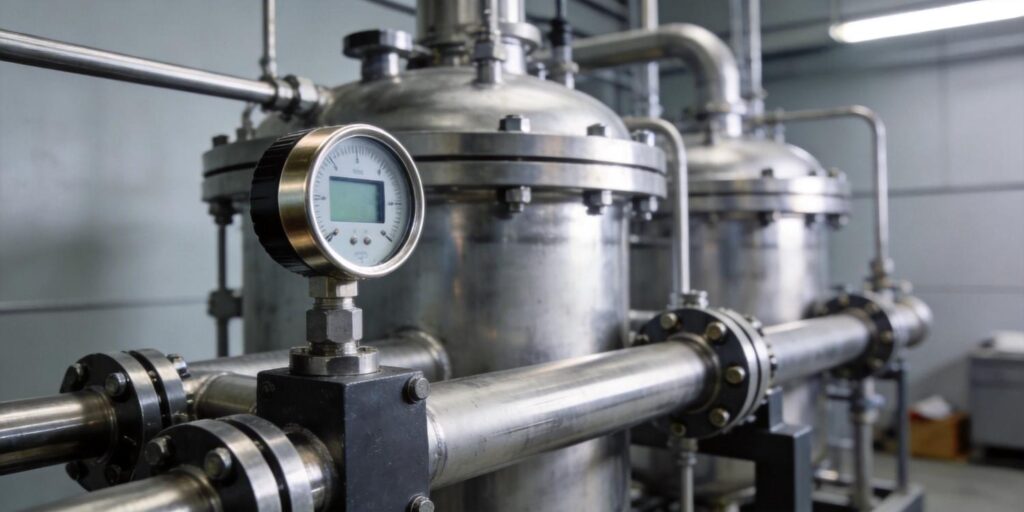
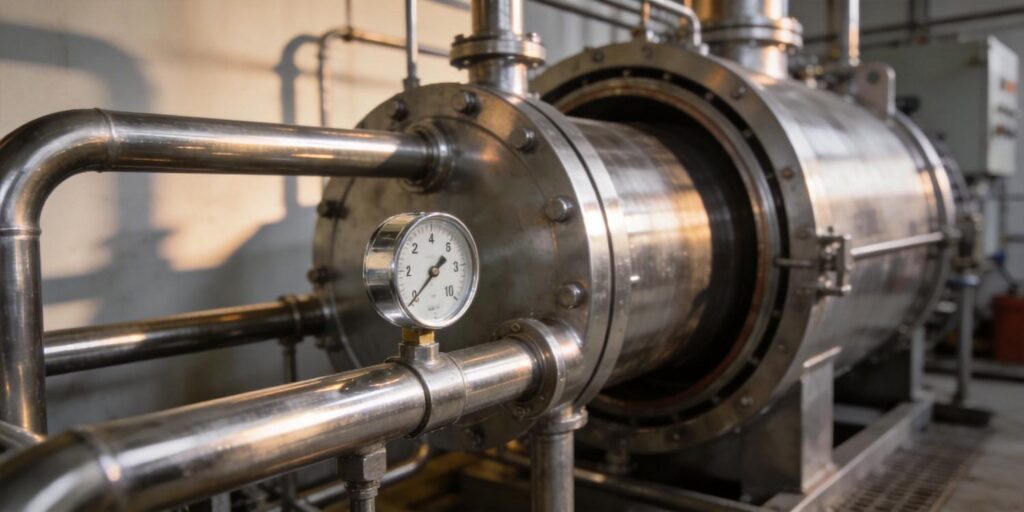
Industrial vacuum gauges installed on production line

Vacuum Gauge MTBF: What Reliability Metrics Should You Track?

Define MTBF in Industrial Context Mean Time Between Failures (MTBF) quantifies the average operating hours a vacuum gauge can deliver before requiring replacement or major service. In industrial vacuum applications—mass spectrometers, vacuum furnaces, PVD coating lines, battery dry rooms, and electron-beam systems—MTBF is not a laboratory ideal but a practical reliability metric tied directly to […]

Vacuum Gauge MTBF: What Reliability Metrics Should You Track? Read More »

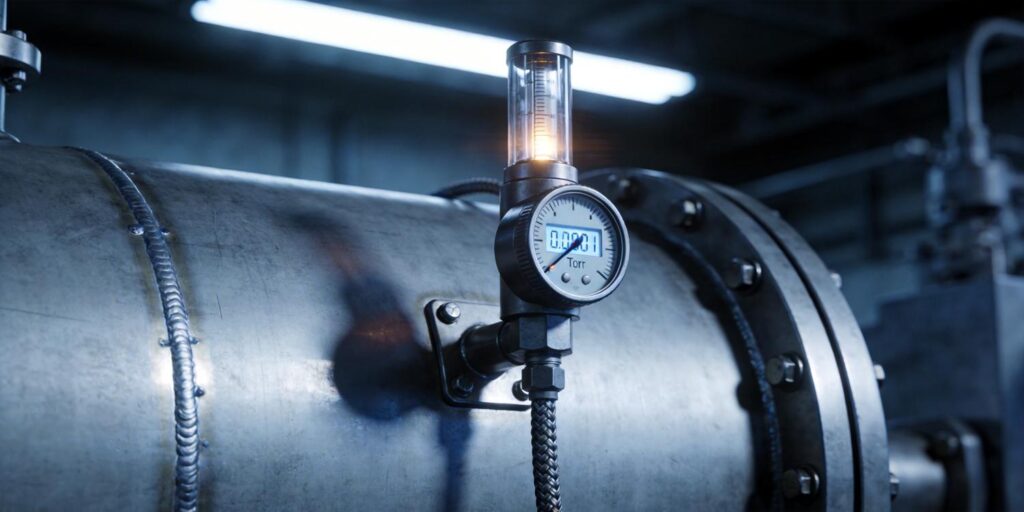
Vacuum gauge mounted on plasma sputtering chamber

How Plasma Processes Influence Vacuum Gauge Readings

Plasma Density Effect on Ionization Gauges In plasma-enhanced processes such as reactive sputtering, PECVD, and plasma etching, the vacuum chamber contains a dense cloud of ions, electrons, and excited neutrals. This external plasma directly influences ionization-type vacuum gauges because their measurement principle already relies on electron–molecule collisions to generate a measurable ion current. The VG-SM225

How Plasma Processes Influence Vacuum Gauge Readings Read More »

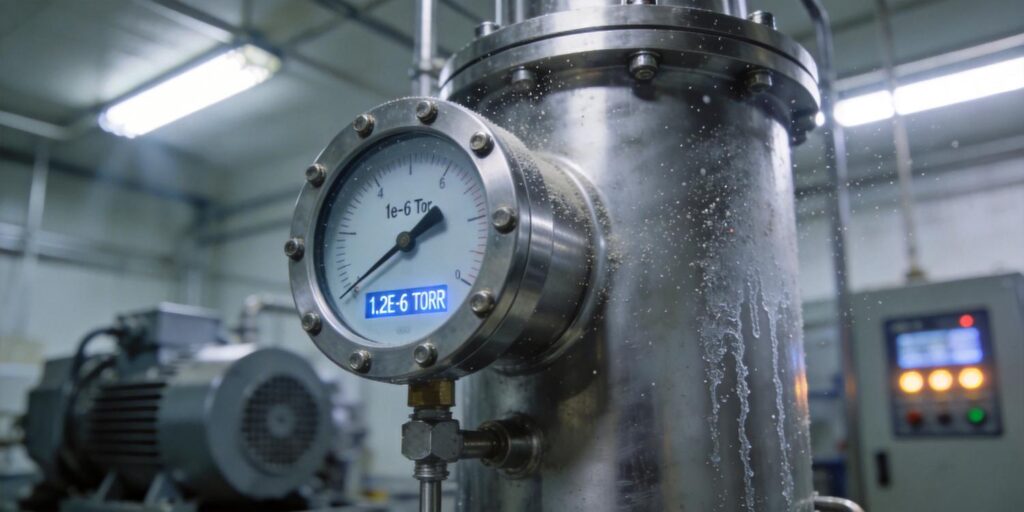
Vacuum gauge installed on industrial metal 3D printer chamber

Vacuum Monitoring in Additive Manufacturing Systems

Vacuum-Assisted Metal Printing Requirements Additive manufacturing of metal parts—particularly electron-beam melting (EBM) and vacuum-assisted laser powder-bed fusion—relies on controlled vacuum environments to eliminate oxidation, improve melt-pool stability, and ensure defect-free microstructures. Build chambers must reach and hold pressures low enough to prevent oxygen and nitrogen pickup while still allowing efficient powder spreading and electron or

Vacuum Monitoring in Additive Manufacturing Systems Read More »

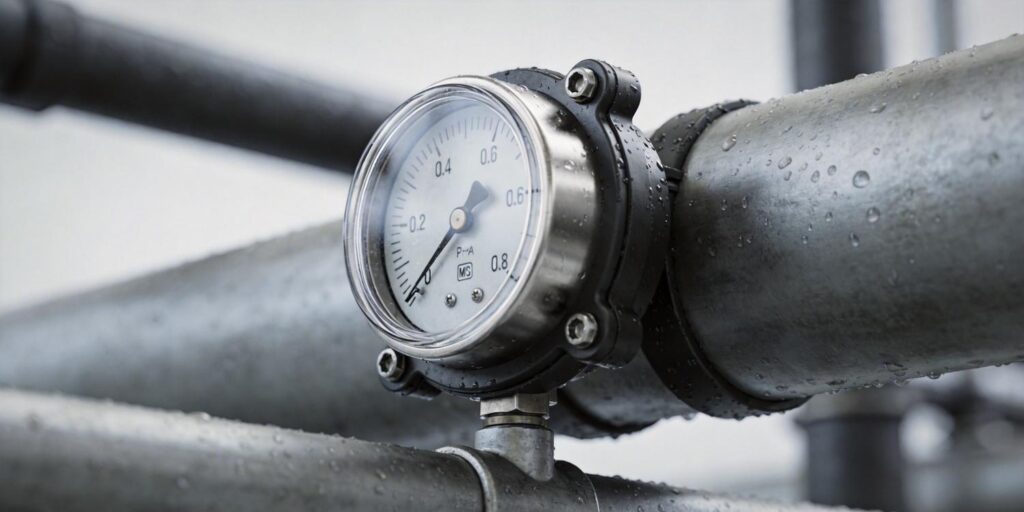
Vacuum gauge calibrated at atmospheric pressure

Vacuum Gauge Zero Offset Adjustment Procedure

When Zero Adjustment Is Required Zero offset in vacuum transmitters refers to a systematic shift where the gauge reads a non-zero pressure at true atmosphere (≈760 Torr) or fails to approach zero at base vacuum. For Poseidon Scientific’s VG-SP205 Pirani Vacuum Transmitter and VG-SM225 Cold Cathode Vacuum Gauge, such offsets are rare thanks to factory

Vacuum Gauge Zero Offset Adjustment Procedure Read More »

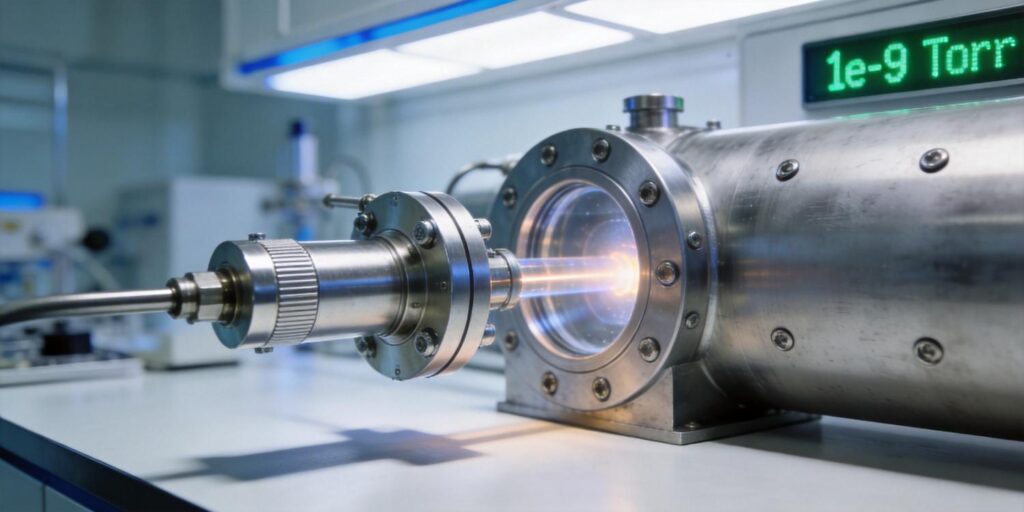
Cold cathode vacuum gauge on electron beam vacuum chamber

High Vacuum Measurement in Electron Beam Systems

Required Pressure Levels (10⁻⁵ mbar Region) Electron beam systems—scanning electron microscopes (SEM), electron-beam lithography tools, e-beam welding machines, and high-resolution analytical instruments—operate in the high-vacuum regime to ensure electrons travel in straight-line paths without scattering. At pressures above ~10⁻³ mbar (~7.5×10⁻⁴ Torr), the mean free path of residual gas molecules drops below chamber dimensions, causing

High Vacuum Measurement in Electron Beam Systems Read More »

Vacuum gauge monitoring isolated vacuum chamber

Vacuum Gauge Drift vs System Leak: How to Differentiate

Baseline Stability Test Distinguishing genuine system leaks from vacuum-gauge drift begins with a simple, repeatable baseline stability test. Pump the chamber to a known low-pressure setpoint—typically 10⁻⁴ Torr for Pirani range or 10⁻⁶ Torr for cold-cathode verification—using a clean, oil-free or well-trapped system. Isolate the pump and close all valves, then record the gauge output

Vacuum Gauge Drift vs System Leak: How to Differentiate Read More »

Vacuum gauge installed on battery production vacuum system

Selecting Vacuum Gauges for Battery Manufacturing Dry Rooms

Dry Room Vacuum Requirements Lithium-ion battery manufacturing demands ultra-dry environments to prevent moisture from reacting with lithium salts, electrolytes, or electrode materials. Dry rooms typically maintain dew points of −40 °C to −60 °C at atmospheric pressure, but the critical vacuum step occurs inside integrated drying ovens or airlock chambers. These ovens remove residual solvents

Selecting Vacuum Gauges for Battery Manufacturing Dry Rooms Read More »

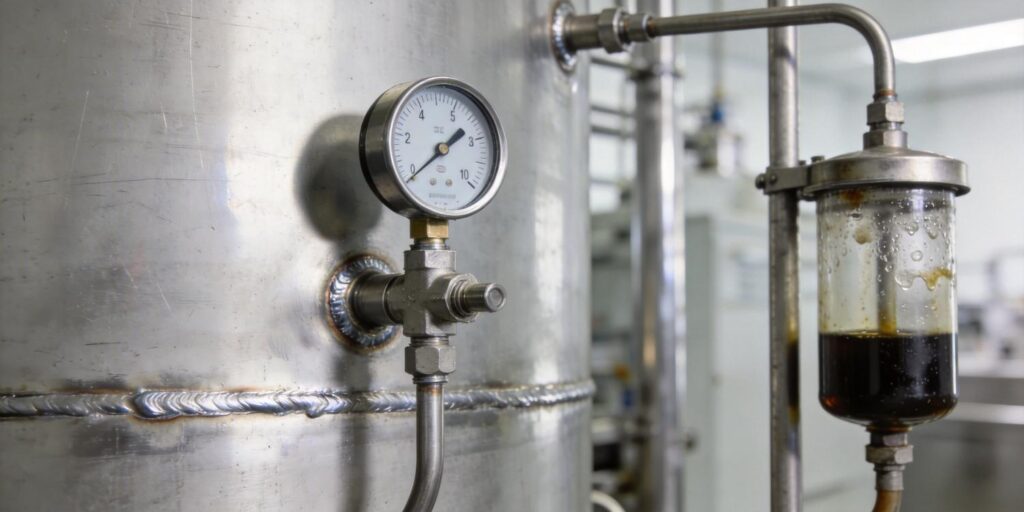
Vacuum pump system with installed vacuum gauge and oil trap

Vacuum Gauge Failure Due to Oil Backstreaming

Oil Vapor Migration Mechanism Oil backstreaming remains one of the most common yet preventable causes of vacuum-gauge failure in systems backed by oil-sealed rotary-vane or diffusion pumps. The mechanism is rooted in molecular-flow physics. When chamber pressure drops below ~10⁻² Torr, the mean free path of gas molecules exceeds the diameter of connecting tubing. Oil

Vacuum Gauge Failure Due to Oil Backstreaming Read More »

Digital vacuum gauge displaying absolute pressure value

Comparing Absolute vs Relative Vacuum Measurement Concepts

Define Absolute Pressure Reference Vacuum measurement begins with a fundamental distinction: absolute pressure is always referenced to a perfect vacuum—zero molecules, zero pressure. This zero point is universal and unchanging, independent of location, weather, or altitude. In contrast, relative (or gauge) pressure uses local atmospheric pressure as its zero reference. At sea level on a

Comparing Absolute vs Relative Vacuum Measurement Concepts Read More »

Vacuum transmitter connected to automated control system

Pressure Control Loop Tuning with Vacuum Transmitters

Control Loop Fundamentals (PID) Pressure control in vacuum systems—whether maintaining a stable process pressure in a coating chamber or protecting sensitive instruments—relies on closed-loop feedback. The most common controller architecture is PID (Proportional-Integral-Derivative). The controller continuously calculates an error value as the difference between a desired setpoint and the actual pressure measured by the vacuum

Pressure Control Loop Tuning with Vacuum Transmitters Read More »

Shopping Cart
Poseidon Scientific
Privacy Overview

This website uses cookies so that we can provide you with the best user experience possible. Cookie information is stored in your browser and performs functions such as recognising you when you return to our website and helping our team to understand which sections of the website you find most interesting and useful.