Pirani vacuum transmitter installed in laboratory environment

How Temperature Affects Pirani Vacuum Gauge Readings

Thermal Principle Review Pirani vacuum gauges operate on the fundamental principle of gas thermal conductivity. A thin metal filament—typically platinum in modern designs like the Poseidon Scientific VG-SP205 Pirani Vacuum Transmitter—is heated by an electrical current and maintained at a constant temperature via a Wheatstone bridge circuit. As residual gas molecules collide with the hot […]

How Temperature Affects Pirani Vacuum Gauge Readings Read More »

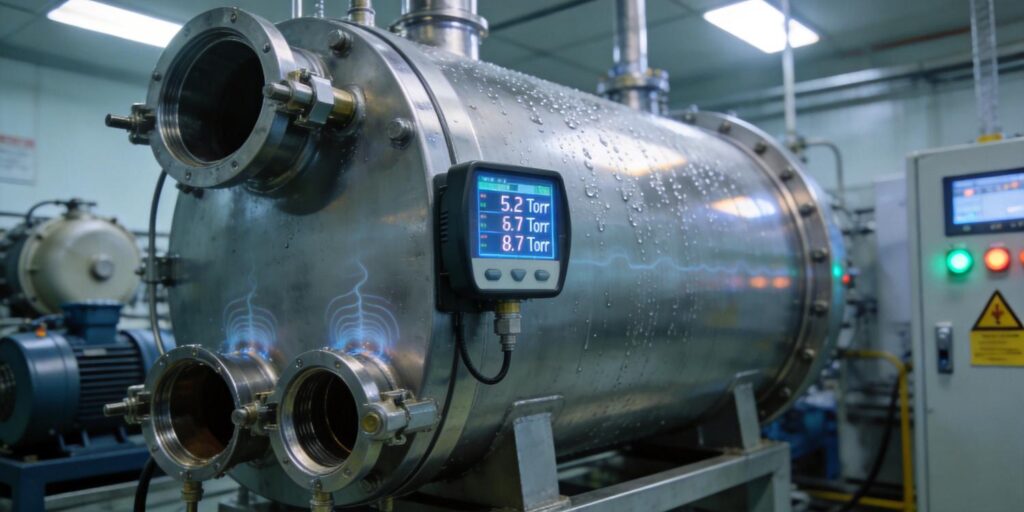
Vacuum gauges installed on solar panel production vacuum chamber

Vacuum Gauge Selection for Solar Panel Manufacturing

Vacuum Steps in Solar Production Solar panel manufacturing—whether crystalline silicon or thin-film technologies—relies on vacuum processes at multiple critical stages to ensure high efficiency, uniform coatings, and long-term module reliability. Each step demands precise pressure control to eliminate oxygen, moisture, and contaminants that could degrade cell performance or cause delamination. The production sequence typically begins

Vacuum Gauge Selection for Solar Panel Manufacturing Read More »

SPE cleanup before LC MS analysis

Preventing Matrix Effects in LC-MS Using SPE

1. Matrix Effect Overview in LC-MS Analysis Matrix effects represent one of the most significant challenges in liquid chromatography-mass spectrometry (LC-MS) analysis, particularly when dealing with complex biological and environmental samples. These effects occur when co-eluting compounds from the sample matrix interfere with the ionization process of target analytes, leading to either suppression or enhancement

Preventing Matrix Effects in LC-MS Using SPE Read More »

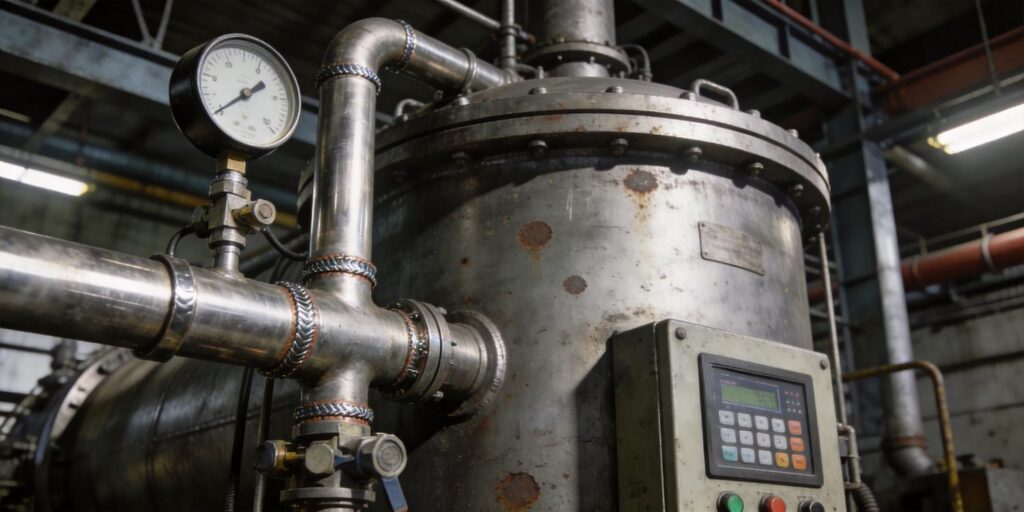
Vacuum transmitter wiring inside industrial control cabinet

Common Causes of Vacuum Gauge Signal Noise

Electrical Interference Electrical interference, or electromagnetic interference (EMI), is one of the most frequent sources of signal noise in vacuum gauge installations. Motors, relays, RF generators, plasma power supplies, and even nearby variable-frequency drives produce rapidly changing electric and magnetic fields that couple into the gauge’s analog output lines. The result is erratic voltage fluctuations—often

Common Causes of Vacuum Gauge Signal Noise Read More »

diagram showing channeling in SPE cartridge

SPE Cartridge Channeling: Causes and Solutions

What is Channeling in SPE Cartridges? Channeling in solid phase extraction (SPE) cartridges refers to the formation of tunnels or pathways through the sorbent bed where liquids flow preferentially, bypassing the majority of the stationary phase. This phenomenon occurs when excessive vacuum or pressure is applied during conditioning or sample loading steps, causing liquids to

SPE Cartridge Channeling: Causes and Solutions Read More »

diagram illustrating SPE breakthrough

Why SPE Breakthrough Happens and How to Prevent It

Understanding SPE Breakthrough: The Critical Phenomenon in Solid-Phase Extraction Solid-phase extraction (SPE) breakthrough represents one of the most significant challenges in analytical sample preparation, directly impacting method accuracy, precision, and overall analytical performance. As product manager at Poseidon Scientific, I’ve witnessed how breakthrough issues can compromise entire analytical workflows, leading to false negatives, inaccurate quantitation,

Why SPE Breakthrough Happens and How to Prevent It Read More »

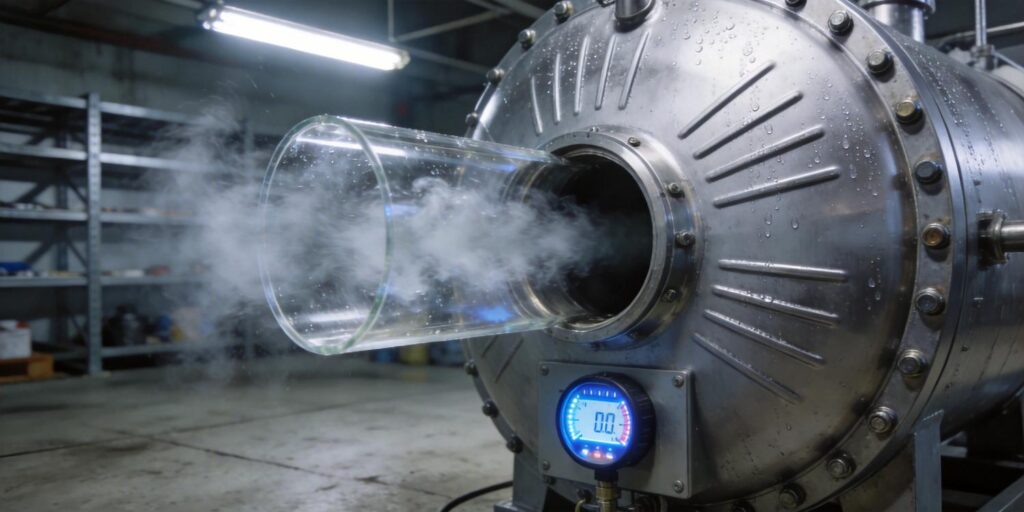
Cold cathode gauge installed on high vacuum stainless steel chamber

Why Cold Cathode Gauges Are Ideal for High Vacuum Ranges

Ionization Mechanism Cold cathode vacuum gauges measure high vacuum through a self-sustaining gas discharge known as the Penning discharge. Unlike hot-cathode ionization gauges that rely on a thermionic filament to emit electrons, cold cathode designs use field emission and crossed electric and magnetic fields to generate and trap electrons. This fundamental difference eliminates filament-related issues

Why Cold Cathode Gauges Are Ideal for High Vacuum Ranges Read More »

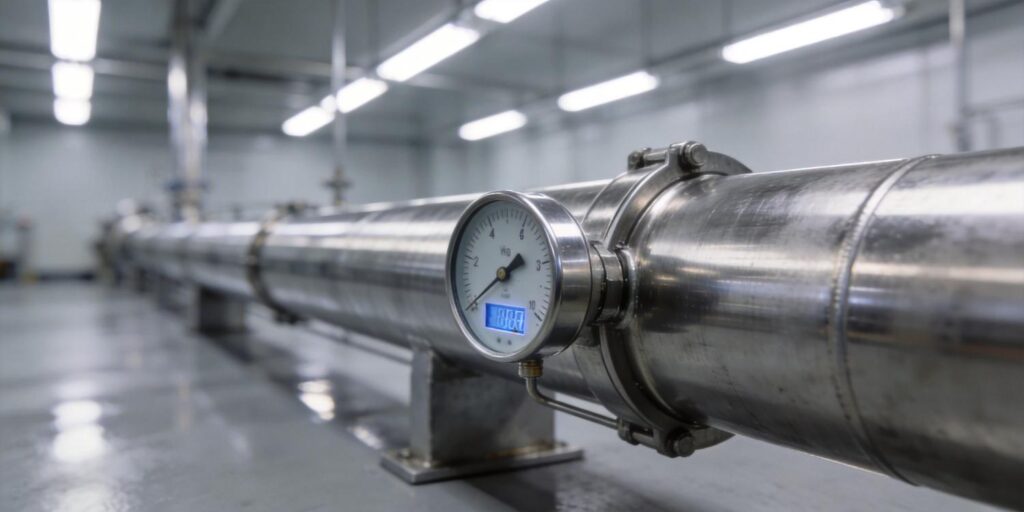
Vacuum chamber during pump-down process with pressure gauge installed

Optimizing Pump-Down Time with Proper Vacuum Gauge Strategy

Pump-down Curve Basics Every vacuum system follows a characteristic pump-down curve: a plot of pressure versus time that reveals how quickly the chamber reaches target vacuum levels. The curve is typically plotted on a logarithmic pressure scale against linear time, showing three distinct phases driven by gas-flow regimes. In the initial viscous-flow stage (atmosphere down

Optimizing Pump-Down Time with Proper Vacuum Gauge Strategy Read More »

Industrial vacuum gauge display showing stable pressure reading

Vacuum Gauge Accuracy vs Repeatability: What Really Matters?

Define Accuracy vs Repeatability In vacuum measurement, two terms frequently cause confusion: accuracy and repeatability. Understanding the distinction is essential for engineers specifying gauges and procurement teams evaluating total system performance. Accuracy describes how close a gauge reading is to the true absolute pressure. It quantifies systematic error—how far the displayed value deviates from a

Vacuum Gauge Accuracy vs Repeatability: What Really Matters? Read More »

laboratory troubleshooting SPE extraction

Troubleshooting Low Recovery in SPE

Common Causes of Low Recovery in SPE Low recovery in solid phase extraction (SPE) is one of the most frustrating challenges analytical chemists face. When your target analytes fail to appear in expected concentrations, it’s essential to systematically identify where the problem lies. According to forensic science literature, recovery problems in SPE can be categorized

Troubleshooting Low Recovery in SPE Read More »

Shopping Cart
Poseidon Scientific
Privacy Overview

This website uses cookies so that we can provide you with the best user experience possible. Cookie information is stored in your browser and performs functions such as recognising you when you return to our website and helping our team to understand which sections of the website you find most interesting and useful.