Developing an SPE Method for Environmental Water Monitoring
Developing an SPE Method for Environmental Water Monitoring Read More »
Overview of Endocrine Disrupting Compounds Endocrine disrupting compounds (EDCs) represent a diverse class of chemical contaminants that interfere with the normal functioning of the endocrine system in humans and wildlife. These compounds mimic, block, or otherwise disrupt hormonal signaling pathways, potentially leading to reproductive abnormalities, developmental disorders, and increased cancer risks. EDCs encompass a wide
SPE Sample Preparation for Endocrine Disruptor Analysis Read More »
Pharmaceutical Contaminants Overview Pharmaceutical contaminants in surface water represent a growing environmental concern, with compounds ranging from non-steroidal anti-inflammatory drugs (NSAIDs) to antibiotics, hormones, and antidepressants entering aquatic systems through various pathways. These emerging contaminants typically exist at trace concentrations (ng/L to μg/L), making their detection and quantification challenging without effective preconcentration techniques. According to
SPE Preconcentration of Pharmaceuticals in Surface Water Read More »
Common Pesticide Residues in Fruit Samples Fruit samples present unique challenges for pesticide residue analysis due to their complex matrices containing sugars, organic acids, pigments, and varying water content. The most commonly encountered pesticide residues in fruits span multiple chemical classes, each requiring specific analytical approaches. Organochlorine pesticides such as DDT, DDE, DDD, endosulfan, and
Solid Phase Extraction for Pesticide Residue Analysis in Fruits Read More »
1. Mycotoxin Contamination Overview Mycotoxins represent a significant food safety concern in grain commodities worldwide. These toxic secondary metabolites produced by fungi such as Aspergillus, Fusarium, and Penicillium species can contaminate various grains including corn, wheat, rice, and barley. Among the most concerning mycotoxins are aflatoxins (B1, B2, G1, G2), ochratoxin A, fumonisins, deoxynivalenol, and
SPE Cleanup for Mycotoxin Detection in Grain Samples Read More »
Environmental Sources of Steroid Hormones Steroid hormones enter environmental water systems through multiple pathways, primarily from human and animal waste. Estrogens (estrone, estradiol, estriol), androgens (testosterone), progestogens (progesterone), and synthetic hormones (ethinylestradiol) are excreted in urine and feces, passing through wastewater treatment plants that often incompletely remove these compounds. Agricultural runoff containing livestock manure and
SPE Method for Hormone Analysis in Environmental Water Read More »
Regulatory Monitoring of Veterinary Drugs Veterinary drug residue monitoring in meat products represents a critical public health safeguard implemented by regulatory agencies worldwide. The detection of antibacterial drugs, sulfonamides, and other therapeutic agents in animal tissues requires robust analytical methodologies that can achieve detection limits at parts-per-billion (ppB) levels. As noted in the literature, “antibacterial
Extracting Veterinary Drug Residues from Meat Using SPE Read More »
Antibiotic Residue Regulations Overview Antibiotic residue analysis in milk represents a critical component of food safety monitoring worldwide. Regulatory frameworks such as the European Union’s Maximum Residue Limits (MRLs), the U.S. Food and Drug Administration’s tolerances, and China’s GB standards establish stringent requirements for veterinary drug residues in dairy products. These regulations typically specify detection
Using HLB SPE for Antibiotic Residue Analysis in Milk Read More »
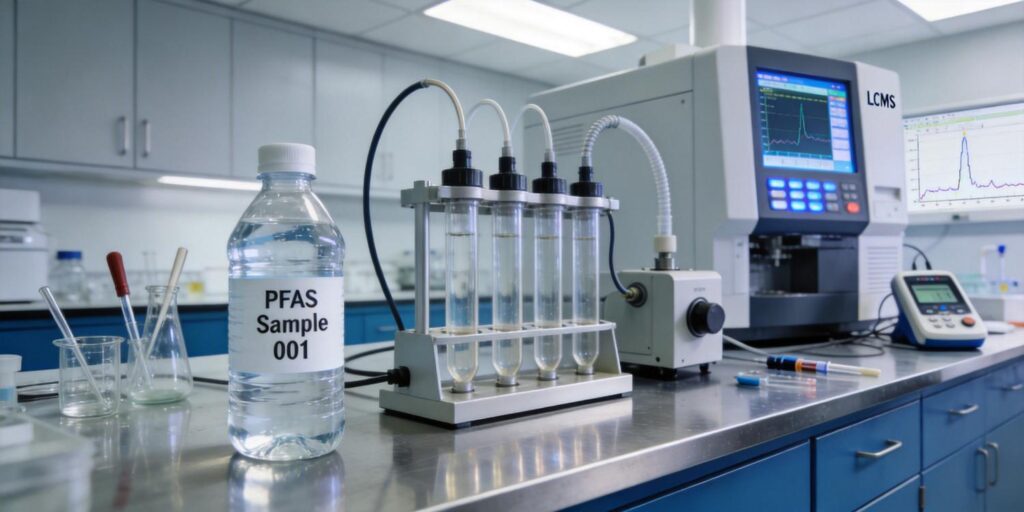
Overview of PFAS Contamination in Drinking Water Per- and polyfluoroalkyl substances (PFAS) represent a class of synthetic chemicals that have become a significant environmental concern in drinking water systems worldwide. These compounds, characterized by their strong carbon-fluorine bonds, exhibit exceptional thermal and chemical stability, making them persistent in the environment and resistant to conventional water
SPE Sample Preparation for PFAS Analysis in Drinking Water Read More »