Vacuum Gauge

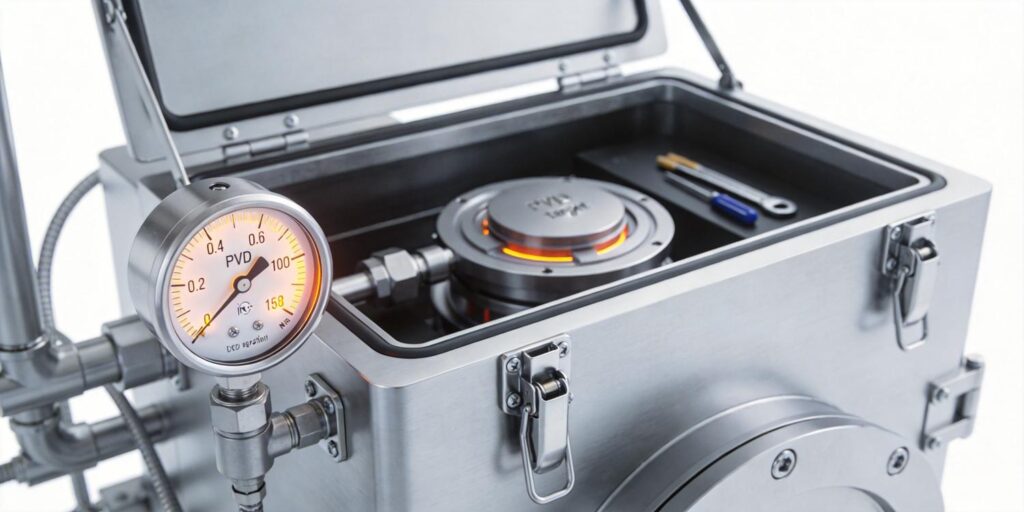
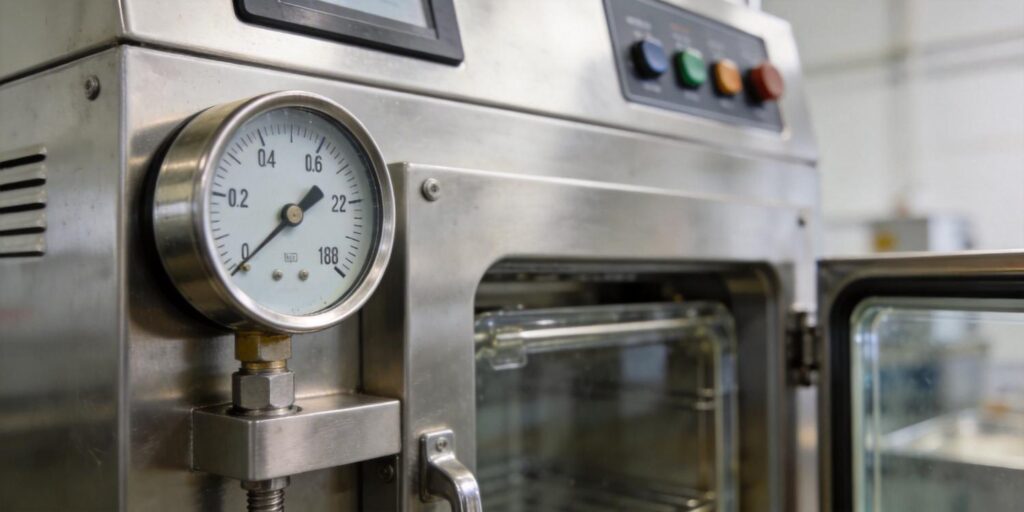
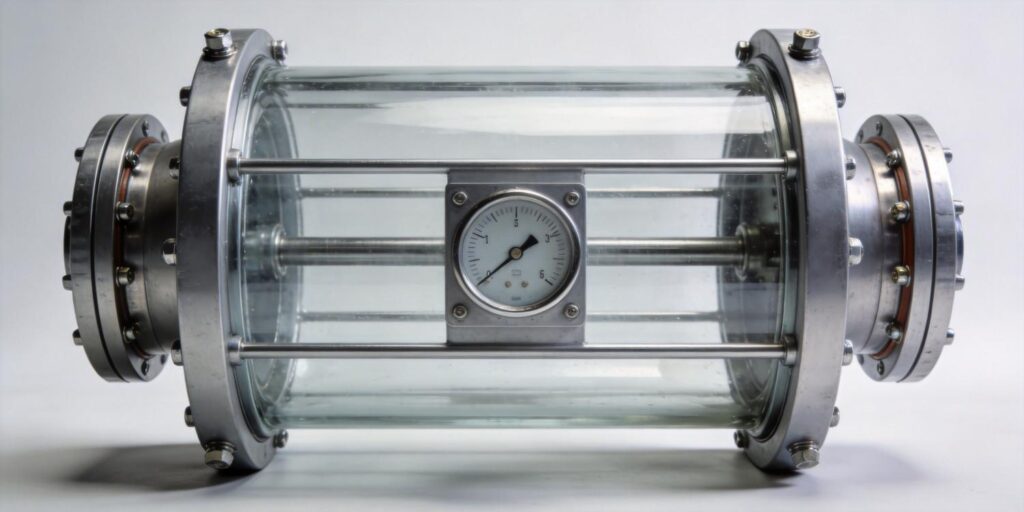
Two Pirani vacuum gauges installed on industrial vacuum chamber

Choosing Between Convection Enhanced Pirani and Standard Pirani

Measurement Principle Difference Between Standard Pirani and Convection-Enhanced Pirani Gauges Both standard Pirani and convection-enhanced Pirani vacuum gauges operate on the fundamental principle of thermal conductivity: a heated filament (typically platinum in modern designs) loses heat to the surrounding gas molecules, and the power required to maintain constant filament temperature correlates directly with gas pressure. […]

Choosing Between Convection Enhanced Pirani and Standard Pirani Read More »

Technician inspecting vacuum gauge on industrial production line

How to Reduce Downtime with Reliable Vacuum Gauges

The Hidden Cost of Vacuum Gauge Failure in Industrial Operations Unplanned downtime in vacuum-dependent processes can cost thousands of dollars per hour. Semiconductor fabs lose up to $50,000–$100,000 per hour when a production tool goes offline. Aerospace vacuum brazing furnaces face scrap rates that multiply with each delayed cycle. Mass spectrometer labs see instrument utilization

How to Reduce Downtime with Reliable Vacuum Gauges Read More »

Vacuum gauge installed in university laboratory vacuum setup

Vacuum Monitoring in Research Laboratories

Common Laboratory Vacuum Setups and Their Monitoring Needs Research laboratories rely on vacuum technology for a wide range of experiments, from basic material characterization to advanced surface science and analytical instrumentation. Typical setups include small bell-jar chambers for thin-film deposition, custom vacuum manifolds for gas-handling experiments, and integrated systems within commercial instruments such as mass

Vacuum Monitoring in Research Laboratories Read More »

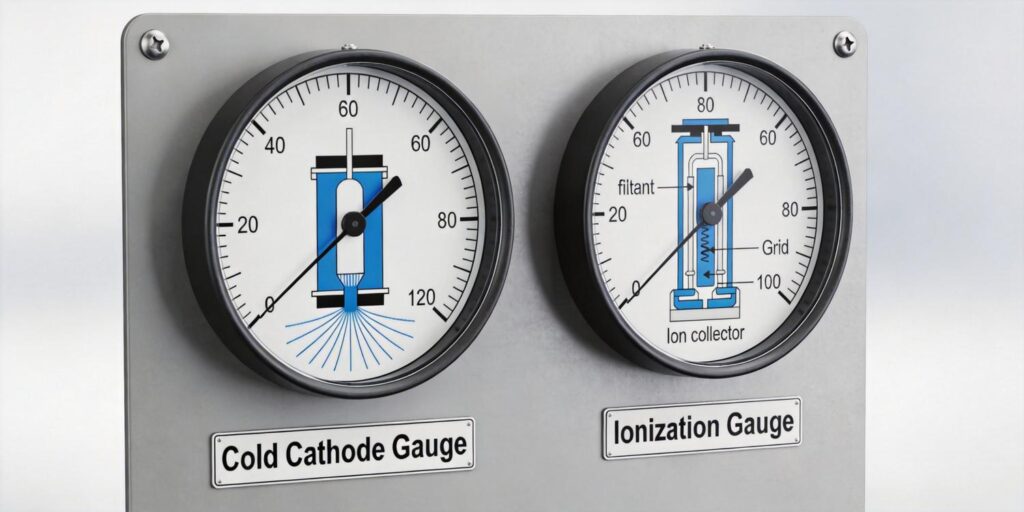
Close up of cold cathode vacuum gauge mounted on chamber

Cold Cathode Gauge Lifespan: What Affects It?

Operating Pressure Influence on Cold Cathode Gauge Lifespan Cold cathode vacuum gauges, such as Poseidon Scientific’s VG-SM225, rely on the Penning discharge principle to measure pressures from 10⁻³ Torr down to 10⁻⁷ Torr. The operating pressure directly determines the rate of electrode wear and overall service life. At pressures above 10⁻³ Torr, the higher molecular

Cold Cathode Gauge Lifespan: What Affects It? Read More »

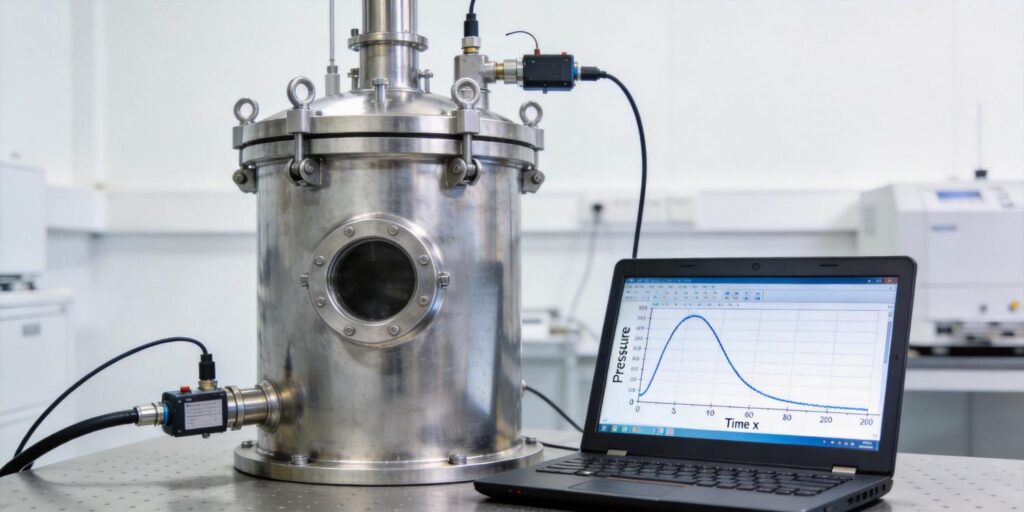
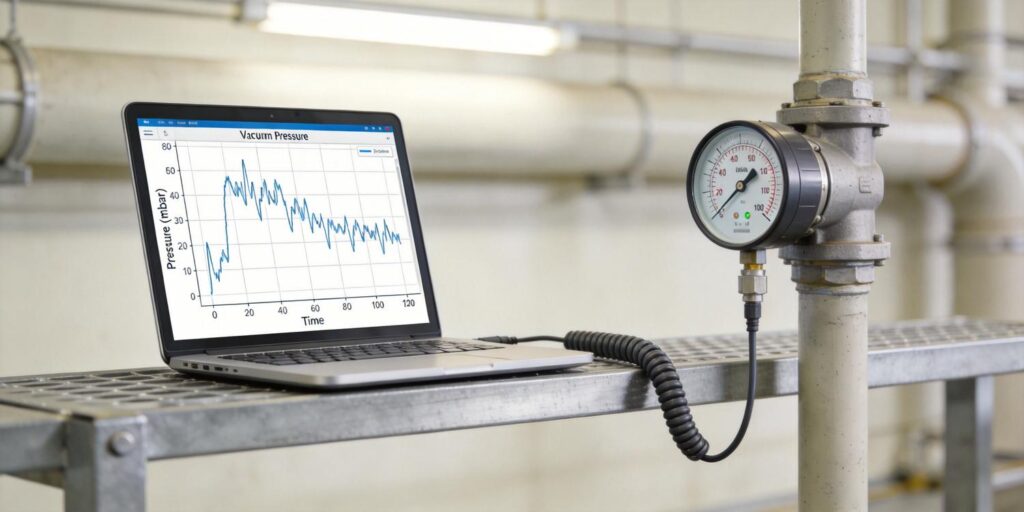
Pressure rise test graph displayed beside vacuum chamber

How to Detect Micro Leaks Using Vacuum Gauge Data

Understanding the Pressure Rise Test for Micro Leak Detection In vacuum systems, even micro leaks measuring 10⁻⁹ Torr·L/s or smaller can compromise process integrity, introduce contamination, or reduce equipment lifetime. The pressure rise test (also called rate-of-rise or isolation test) provides a simple, reliable, and gauge-based method to quantify these leaks without specialized helium mass

How to Detect Micro Leaks Using Vacuum Gauge Data Read More »

Vacuum gauge mounted on aerospace vacuum brazing furnace

Vacuum Gauges in Aerospace Component Manufacturing

The Vacuum Brazing Process in Aerospace Component Manufacturing Vacuum brazing stands as a cornerstone joining technique for high-performance aerospace components, including turbine blades, heat exchangers, honeycomb structures, and engine assemblies. Unlike traditional torch or furnace brazing in air or inert gas, the process occurs in a controlled, oxygen-free vacuum environment that eliminates oxidation, prevents contamination,

Vacuum Gauges in Aerospace Component Manufacturing Read More »

Stable vacuum pressure graph on industrial control panel

How to Improve Vacuum System Stability with Better Pressure Monitoring

Understanding Pressure Fluctuations in Vacuum Systems Vacuum systems in analytical instruments, semiconductor processing, and industrial heat treatment demand exceptional pressure stability to deliver consistent results. Even minor fluctuations—often on the order of 10% or more—can degrade process outcomes, extend cycle times, or trigger false alarms in safety interlocks. Identifying the root causes of these instabilities

How to Improve Vacuum System Stability with Better Pressure Monitoring Read More »

Technician calibrating vacuum gauge in laboratory

Vacuum Gauge Calibration: When and How?

In high-vacuum applications ranging from mass spectrometers and scanning electron microscopes to vacuum heat-treatment furnaces and lithium-ion battery drying lines, accurate pressure measurement is the foundation of process repeatability and product quality. Yet even the most robust gauges experience drift over time due to contamination, temperature cycling, or electrode wear. At Poseidon Scientific, we engineered

Vacuum Gauge Calibration: When and How? Read More »

Vacuum gauge reading displayed during plasma operation

How to Reduce False High Vacuum Readings

In high-vacuum systems—whether supporting mass spectrometers, vacuum furnaces, or semiconductor load locks—false high vacuum readings can trigger costly process errors. A gauge may indicate 10⁻⁶ Torr when actual pressure is closer to 10⁻⁴ Torr, leading operators to open chambers prematurely, initiate plasma processes too early, or accept incomplete pump-down cycles. At Poseidon Scientific, we engineered

How to Reduce False High Vacuum Readings Read More »

Vacuum gauge mounted on lithium battery vacuum drying chamber

Vacuum Measurement Challenges in Lithium Battery Production

Lithium-ion battery manufacturing operates at the intersection of precision chemistry and high-volume production. Every step—from slurry coating to electrode drying and final cell assembly—demands controlled environments where even trace moisture or solvent residues can compromise cell capacity, cycle life, and safety. Vacuum technology is indispensable in these processes, yet accurate pressure measurement presents unique challenges.

Vacuum Measurement Challenges in Lithium Battery Production Read More »

Shopping Cart
Poseidon Scientific
Privacy Overview

This website uses cookies so that we can provide you with the best user experience possible. Cookie information is stored in your browser and performs functions such as recognising you when you return to our website and helping our team to understand which sections of the website you find most interesting and useful.