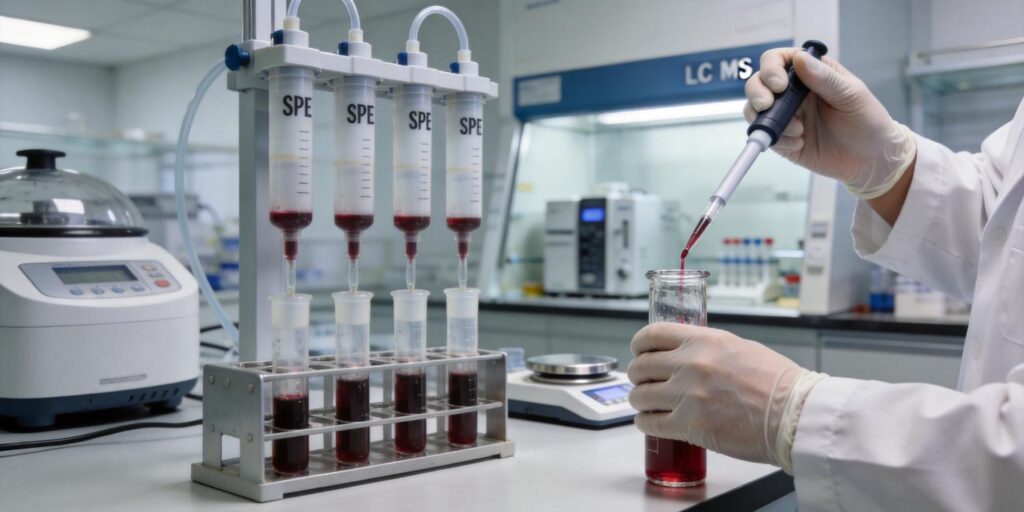
diagram showing channeling inside SPE cartridge

Avoiding Channeling in SPE Cartridges

What Causes Channeling in SPE Cartridges Channeling in solid phase extraction (SPE) cartridges represents one of the most significant flow problems that can compromise extraction efficiency and analyte recovery. According to established literature, channeling occurs when liquids take the path of least resistance through the sorbent bed, creating tunnels or channels that bypass the majority […]

Avoiding Channeling in SPE Cartridges Read More »

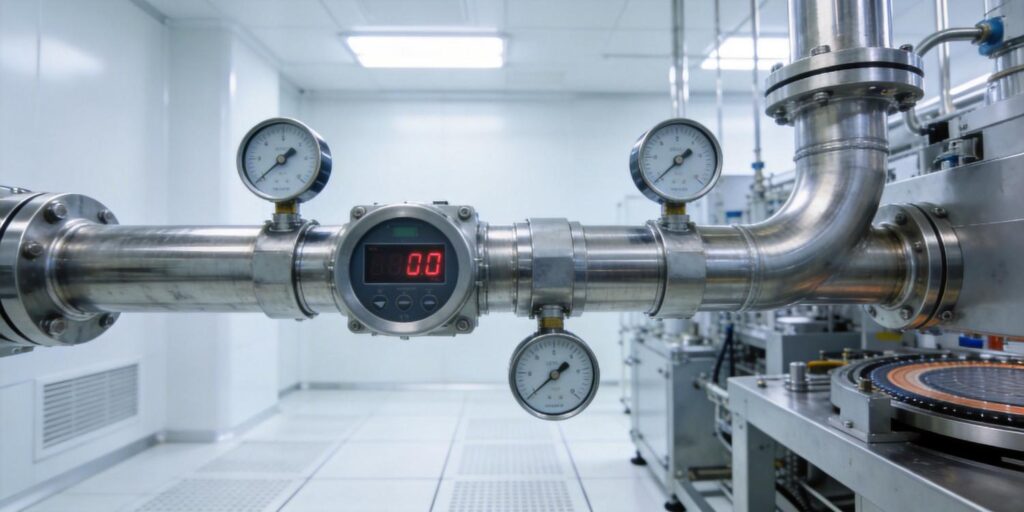
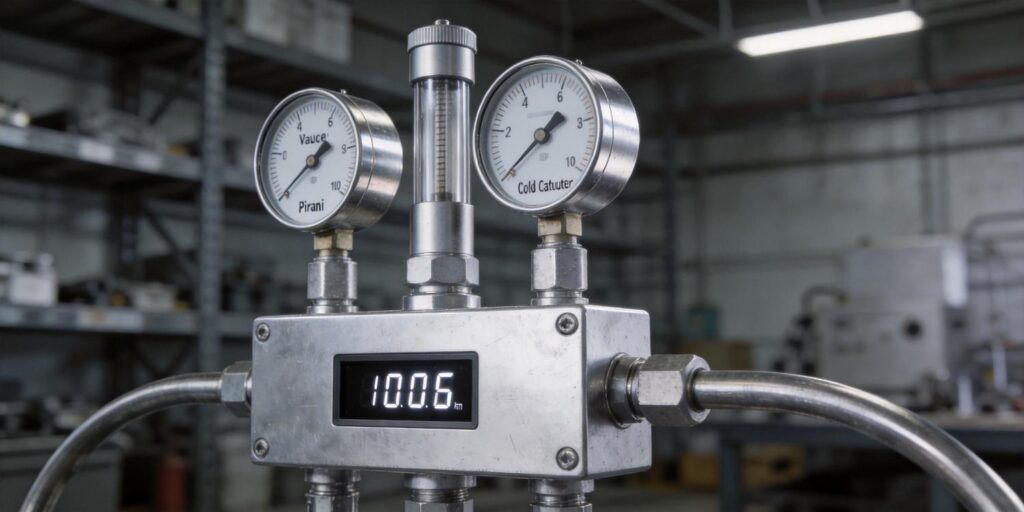
Vacuum gauge mounted on industrial high temperature furnace pipeline

Vacuum Gauge Selection for Industrial Furnaces Above 800°C

Remote Mounting Requirement Industrial vacuum furnaces operating above 800 °C—such as vacuum annealing, tempering, or brazing systems—present a fundamental challenge for pressure measurement: the process chamber itself exceeds the safe operating temperature of any electronic vacuum gauge. Poseidon Scientific’s VG-SP205 Pirani Vacuum Transmitter and VG-SM225 Cold Cathode Vacuum Gauge are both rated for 15–50 °C

Vacuum Gauge Selection for Industrial Furnaces Above 800°C Read More »

elution of analytes from SPE cartridge

SPE Elution Solvent Selection Strategies

Elution Strength Principles Successful solid-phase extraction (SPE) elution fundamentally depends on selecting a solvent with the highest eluotropic strength toward the specific sorbent being used. This approach minimizes total elution volume while maximizing the concentration effect of SPE, which is particularly important for trace enrichment applications. The elution process involves creating a distribution where the

SPE Elution Solvent Selection Strategies Read More »

Technician installing vacuum gauge on stainless vacuum pipe

Why Your Vacuum Gauge Reads Differently After Maintenance

Reassembly Sealing Differences Maintenance on a cold-cathode gauge almost always involves disassembly. With the Poseidon Scientific VG-SM225 Cold Cathode Vacuum Gauge, the sensor head is intentionally removable without breaking the vacuum seal on the chamber. Operators unscrew the “工”-shaped electrode stack, lightly abrade the stainless-steel cathode and anode surfaces with 200- or 500-mesh sandpaper to

Why Your Vacuum Gauge Reads Differently After Maintenance Read More »

Interior of high vacuum stainless steel chamber

Understanding Molecular Flow Region in High Vacuum Measurement

Transition from Viscous to Molecular Flow In vacuum systems, gas behavior changes dramatically as pressure drops. At higher pressures (typically above ~1 Torr), gas flow is viscous or continuum: molecules collide far more frequently with each other than with chamber walls. Viscosity and pressure gradients govern transport, much like fluid flow in pipes at atmospheric

Understanding Molecular Flow Region in High Vacuum Measurement Read More »

SPE wash step during extraction workflow

Wash Solvent Optimization in SPE Methods

1. Role of Wash Step in Sample Cleanup The wash step in solid-phase extraction (SPE) represents a critical juncture between sample loading and analyte elution, serving as the primary mechanism for selective matrix removal. As described in foundational SPE literature, this intermediate phase “removes unwanted, weakly retained materials” while preserving the target analytes on the

Wash Solvent Optimization in SPE Methods Read More »

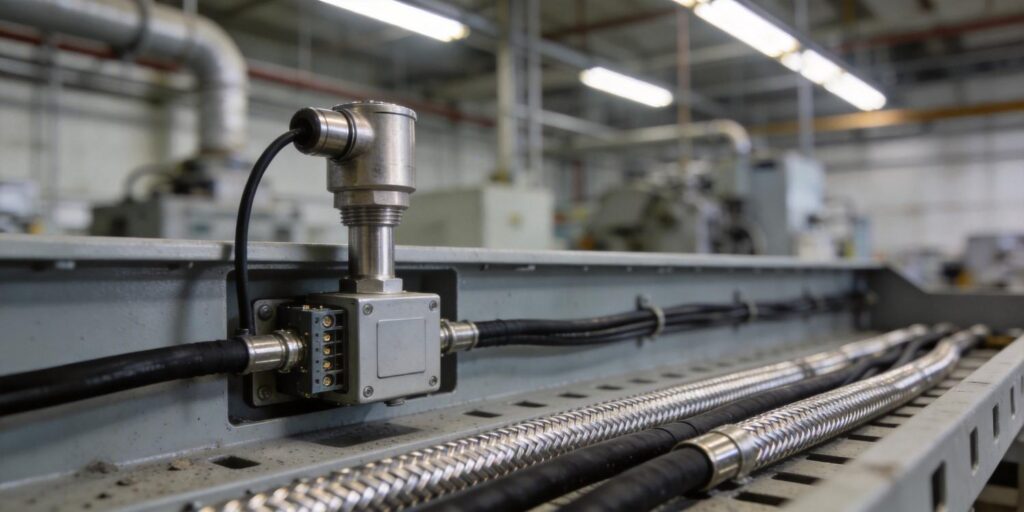
Vacuum transmitter connected with long shielded cable

How Cable Length Impacts Vacuum Gauge Signal Stability

Signal Attenuation Analog signals from vacuum gauges—particularly the 0–10 V output used by both the Poseidon Scientific VG-SP205 Pirani Vacuum Transmitter and VG-SM225 Cold Cathode Vacuum Gauge—travel as voltage levels referenced to ground. Over distance, two primary mechanisms cause attenuation: resistive voltage drop in the cable conductors and capacitive loading that rounds sharp edges in

How Cable Length Impacts Vacuum Gauge Signal Stability Read More »

conditioning SPE cartridge in laboratory

SPE Cartridge Conditioning Protocols Explained

Purpose of Cartridge Conditioning Cartridge conditioning serves multiple critical functions in solid-phase extraction (SPE) protocols. As a product manager at Poseidon Scientific, I’ve observed that proper conditioning is the foundation of successful SPE applications, whether using our HLB, MAX, MCX, WAX, WCX, or 96-well plate formats. First and foremost, conditioning activates the sorbent functional groups.

SPE Cartridge Conditioning Protocols Explained Read More »

diagram showing pH effect on SPE extraction

Sample pH Optimization Strategies for Ion Exchange SPE

Understanding pKa and Analyte Ionization in Ion Exchange SPE The foundation of successful ion exchange solid phase extraction (SPE) lies in understanding the acid dissociation constant (pKa) of your target analytes. The pKa is defined as the pH at which an analyte is 50% ionized, representing the equilibrium point between ionized and non-ionized forms. This

Sample pH Optimization Strategies for Ion Exchange SPE Read More »

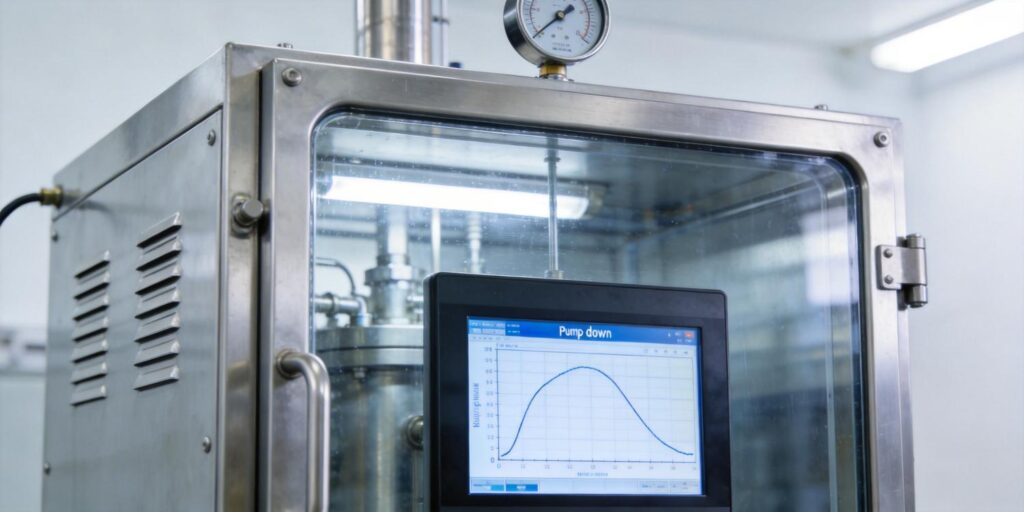
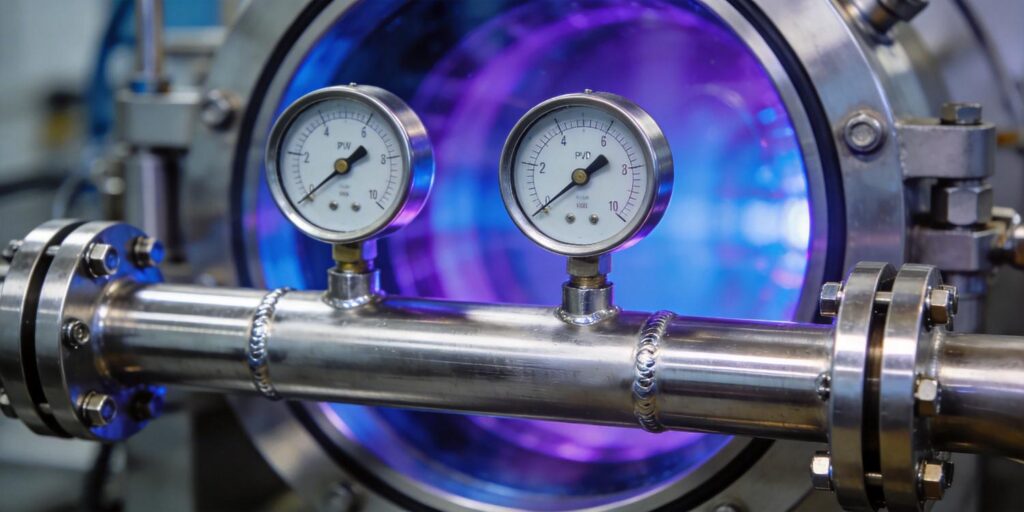
Vacuum gauge installed on PVD coating chamber wall

Vacuum Monitoring in PVD Coating: Where to Place Gauges for Best Film Quality

Pump-down Stage Monitoring Physical vapor deposition (PVD) coating quality starts with a clean, reproducible base vacuum. Residual gases—water vapor, oxygen, or hydrocarbons—can react with sputtered material and degrade film adhesion, stoichiometry, or optical properties. The pump-down phase therefore requires continuous, accurate monitoring from atmosphere down to at least 10−6 Torr. The Poseidon Scientific VG-SP205 Pirani

Vacuum Monitoring in PVD Coating: Where to Place Gauges for Best Film Quality Read More »

Shopping Cart
Poseidon Scientific
Privacy Overview

This website uses cookies so that we can provide you with the best user experience possible. Cookie information is stored in your browser and performs functions such as recognising you when you return to our website and helping our team to understand which sections of the website you find most interesting and useful.