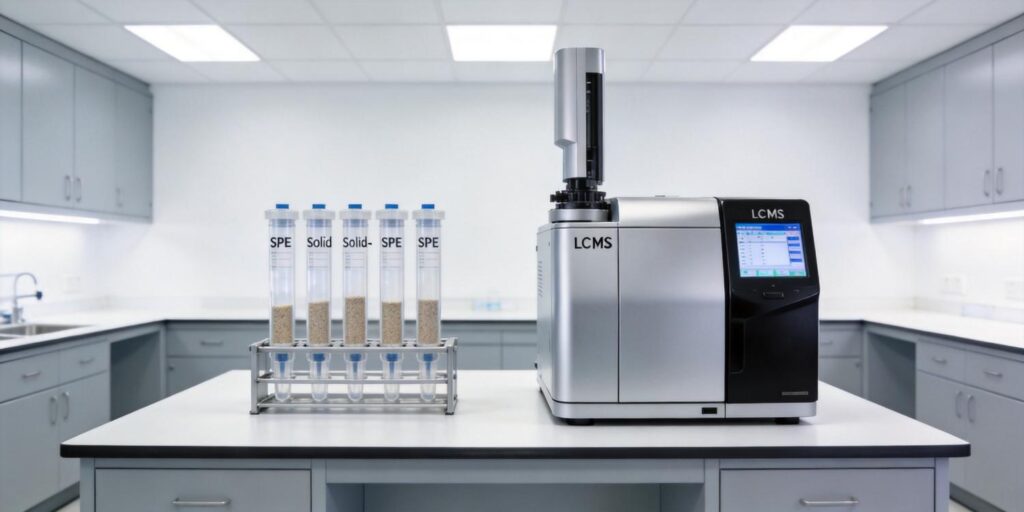
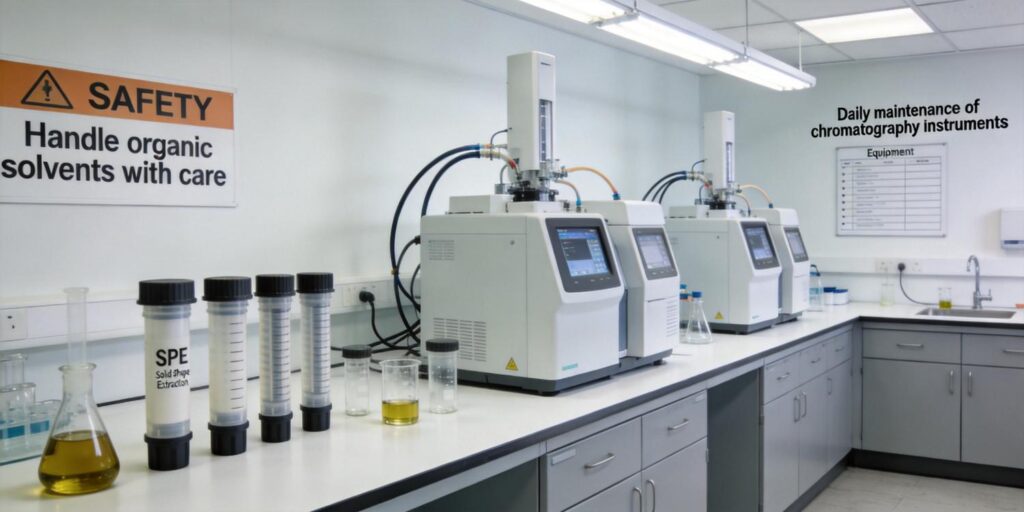
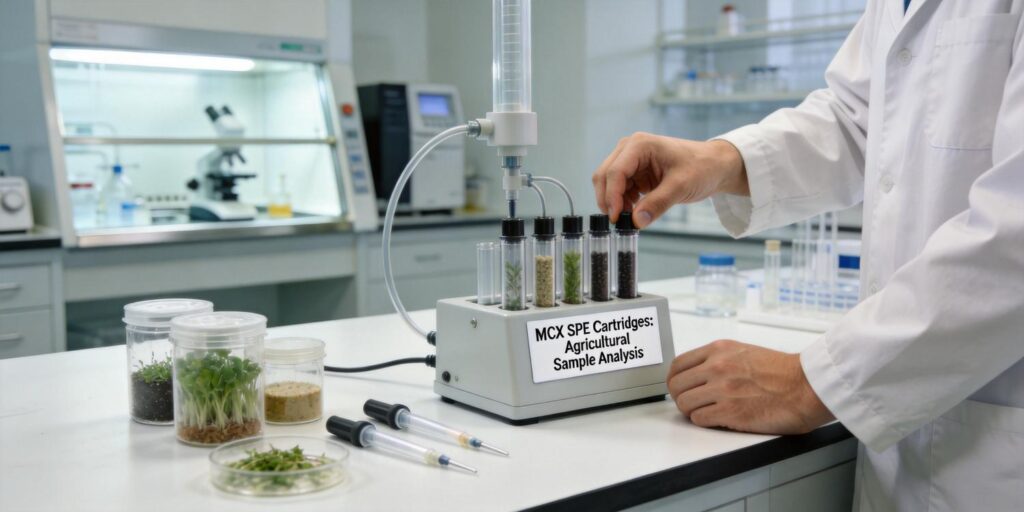
SPE method development process for basic pharmaceutical compounds

SPE Method Development for Basic Drug Compounds

Chemical Properties of Basic Pharmaceuticals Basic drug compounds represent a significant portion of pharmaceutical analytes, characterized by their nitrogen-containing functional groups that can accept protons under acidic conditions. These compounds typically contain amine groups (primary, secondary, tertiary, or quaternary) with pKa values ranging from 2 to 10 for weak bases, and above 10 for strong […]

SPE Method Development for Basic Drug Compounds Read More »

SPE cartridge extraction of PFAS contaminants from drinking water

SPE Extraction of PFAS from Drinking Water

PFAS Contamination Sources in Drinking Water Systems Per- and polyfluoroalkyl substances (PFAS) represent a significant challenge in drinking water safety due to their persistence and widespread contamination. These synthetic chemicals originate from multiple industrial and consumer sources, including firefighting foams used at military bases and airports, industrial manufacturing processes (particularly fluoropolymer production), and consumer products

SPE Extraction of PFAS from Drinking Water Read More »

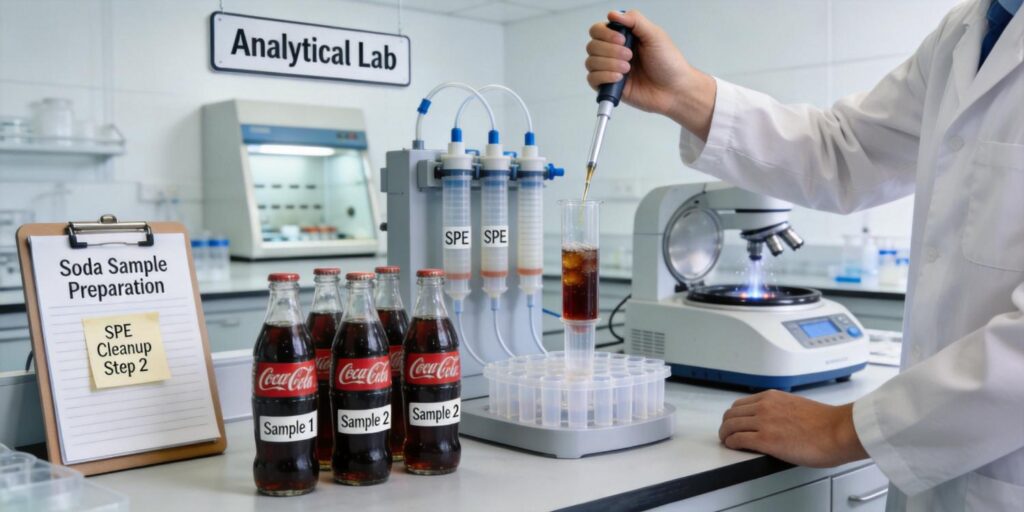
SPE cleanup workflow for cosmetic preservative analysis

Sample Cleanup of Cosmetic Preservatives Using SPE

Preservatives Commonly Analyzed in Cosmetics Cosmetic formulations require effective preservation systems to prevent microbial growth and ensure product stability during shelf life. Among the most widely used preservatives are parabens (methylparaben, ethylparaben, propylparaben, butylparaben) and phenoxyethanol. These compounds are frequently monitored in quality control laboratories due to regulatory restrictions, safety concerns, and the need to

Sample Cleanup of Cosmetic Preservatives Using SPE Read More »

SPE extraction of polyphenolic compounds from wine samples

SPE Isolation of Polyphenols from Wine Samples

Importance of Polyphenols in Wine Chemistry Polyphenols represent a crucial class of compounds in wine chemistry, serving as key determinants of color, flavor, mouthfeel, and aging potential. These secondary metabolites, derived primarily from grape skins, seeds, and stems, include flavonoids (anthocyanins, flavonols, flavan-3-ols), phenolic acids, and stilbenes. Anthocyanins, for instance, are responsible for the red

SPE Isolation of Polyphenols from Wine Samples Read More »

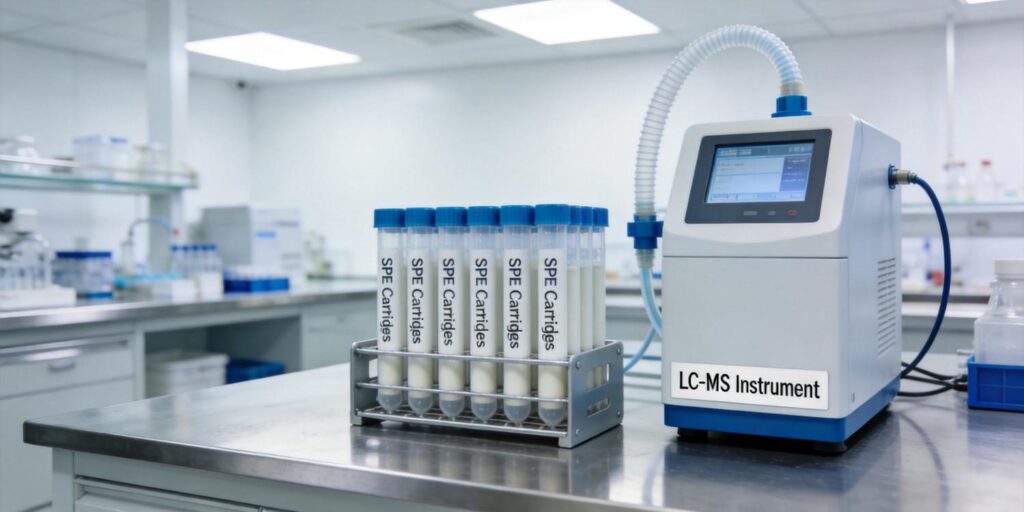
SPE cleanup process preparing serum or plasma samples for LC-MS

Preparing Biological Fluids for LC-MS Using SPE Cartridges

Matrix Complexity of Serum, Plasma, and Urine Biological fluids present unique challenges for LC-MS analysis due to their complex matrix composition. Serum and plasma contain high protein concentrations (approximately 60-80 g/L), primarily albumin and globulins, which can bind analytes and interfere with chromatography. According to established literature, plasma and serum are characterized by increased sample

Preparing Biological Fluids for LC-MS Using SPE Cartridges Read More »

SPE extraction of antibiotic residues from aquaculture samples

SPE Workflow for Monitoring Antibiotic Residues in Aquaculture

1. Antibiotic Usage in Aquaculture and Environmental Concerns The aquaculture industry has experienced exponential growth over the past decades, becoming a crucial source of protein for global populations. However, this expansion has been accompanied by significant antibiotic usage to prevent disease outbreaks and promote growth in densely populated aquatic environments. Tetracyclines (oxytetracycline, chlortetracycline, tetracycline) and

SPE Workflow for Monitoring Antibiotic Residues in Aquaculture Read More »

WAX SPE cartridge extraction of acidic herbicides from soil samples

Using WAX SPE for Extraction of Acidic Herbicides from Soil

Chemical Characteristics of Acidic Herbicides Acidic herbicides such as 2,4-D (2,4-dichlorophenoxyacetic acid) and dicamba (3,6-dichloro-2-methoxybenzoic acid) represent a critical class of agricultural chemicals characterized by their carboxylic acid functional groups. These compounds typically exhibit pKa values below 5, making them strong acids that exist predominantly in their anionic forms at environmental pH levels. The presence

Using WAX SPE for Extraction of Acidic Herbicides from Soil Read More »

SPE cartridge workflow extracting pharmaceutical residues from wastewater samples

Optimizing SPE Recovery for Trace Pharmaceuticals in Wastewater

Challenges of Detecting Trace Pharmaceuticals (ng/L Levels) The analysis of pharmaceuticals in wastewater at trace concentrations (ng/L levels) presents significant analytical challenges. At these ultra-low concentrations, even minor losses during sample preparation can lead to substantial errors in quantification. The complexity of wastewater matrices compounds these difficulties, as humic acids, suspended solids, and other organic

Optimizing SPE Recovery for Trace Pharmaceuticals in Wastewater Read More »

SPE extraction of hormone residues from animal tissue samples

SPE Extraction of Veterinary Hormones from Animal Tissue

Regulatory Concerns About Hormone Residues in Meat The detection and quantification of veterinary hormone residues in animal tissue is a critical public health and regulatory concern worldwide. Regulatory agencies such as the FDA, USDA, and European Commission have established strict maximum residue limits (MRLs) for anabolic steroids, corticosteroids, and other hormonal growth promoters in meat

SPE Extraction of Veterinary Hormones from Animal Tissue Read More »

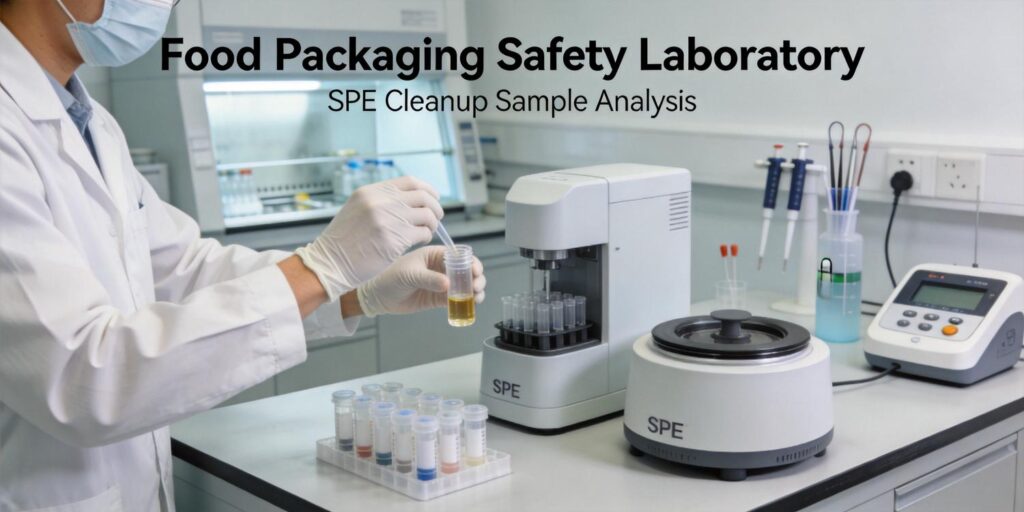
SPE removal of pigments from food extracts before analysis

SPE Cleanup for Pigment-Rich Food Extracts

Analytical Challenges of Pigment-Rich Food Matrices Pigment-rich food matrices present unique analytical challenges that complicate accurate quantification of target analytes. These matrices, including fruits, vegetables, leafy greens, and certain processed foods, contain high concentrations of natural pigments such as chlorophylls, carotenoids, anthocyanins, and betalains. These colored compounds interfere with analytical methods through multiple mechanisms: they

SPE Cleanup for Pigment-Rich Food Extracts Read More »

Shopping Cart
Poseidon Scientific
Privacy Overview

This website uses cookies so that we can provide you with the best user experience possible. Cookie information is stored in your browser and performs functions such as recognising you when you return to our website and helping our team to understand which sections of the website you find most interesting and useful.