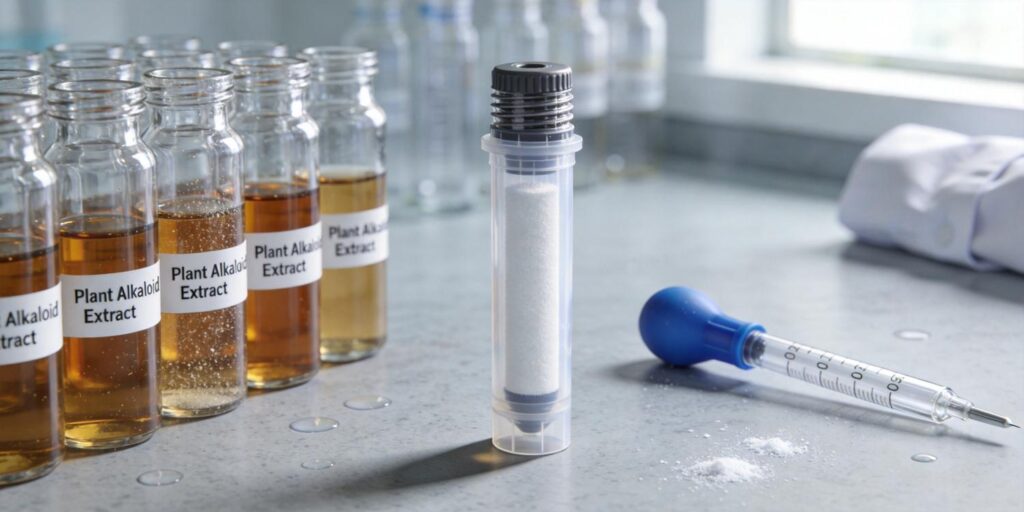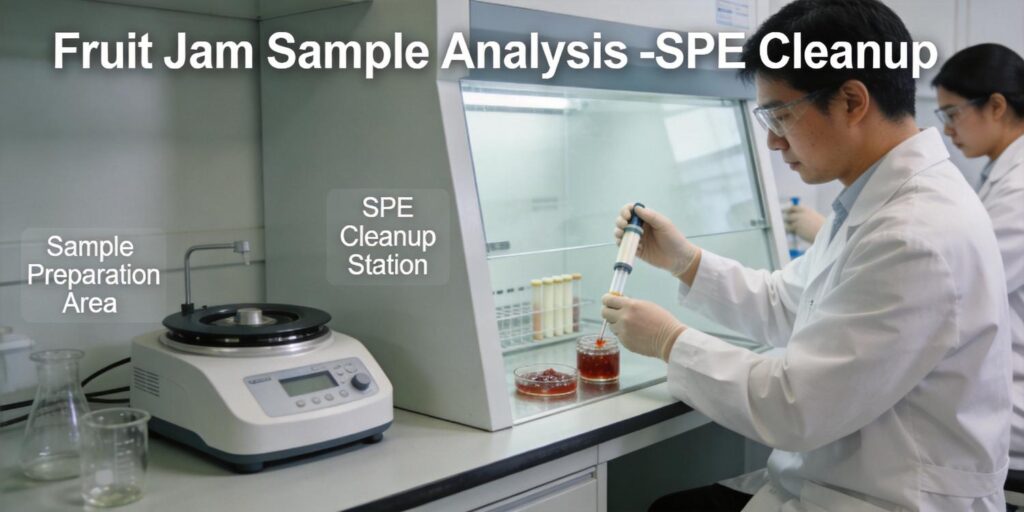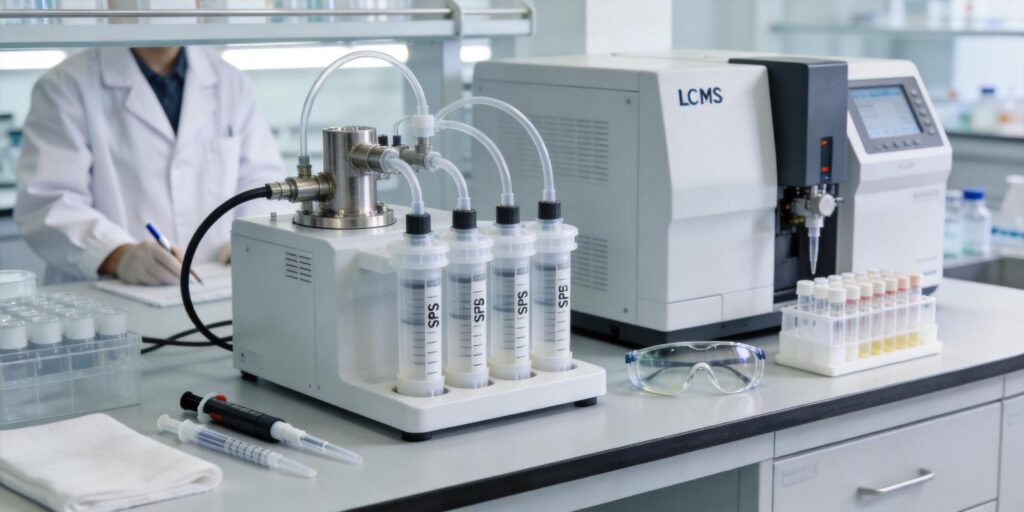
SPE cartridge removing chlorophyll pigments from plant extracts

SPE Cleanup for Pigment Removal in Plant Extract Analysis

Understanding Pigment Interference in Plant Extract Chromatography Plant extracts are rich in bioactive compounds such as flavonoids, alkaloids, terpenoids, and phenolic acids. However, they also contain significant amounts of pigments—primarily chlorophylls, carotenoids, and anthocyanins—that can severely interfere with chromatographic analysis. These pigments often co-extract with target analytes, leading to: Suppression of analyte signals in mass […]

SPE Cleanup for Pigment Removal in Plant Extract Analysis Read More »

SPE purification of artificial sweeteners from beverage samples

SPE Extraction of Artificial Sweeteners from Beverages

1. Types of Artificial Sweeteners in Beverages Artificial sweeteners are widely used in beverages to provide sweetness without calories. Common types include aspartame, sucralose, saccharin, acesulfame potassium (Ace-K), neotame, and cyclamate. These compounds are polar and often present at low concentrations (mg/L range) in complex matrices containing sugars, acids, colors, and preservatives. Effective extraction and

SPE Extraction of Artificial Sweeteners from Beverages Read More »

SPE extraction of drugs from blood samples for clinical analysis

SPE Preparation of Blood Samples for Therapeutic Drug Monitoring

The Critical Role of Therapeutic Drug Monitoring Therapeutic drug monitoring (TDM) is an essential clinical tool that optimizes medication dosing by measuring drug concentrations in blood. TDM ensures efficacy while minimizing toxicity, particularly for drugs with narrow therapeutic windows, such as immunosuppressants (tacrolimus, cyclosporine), antiepileptics (valproic acid, carbamazepine), and certain antibiotics (vancomycin). Accurate and reproducible

SPE Preparation of Blood Samples for Therapeutic Drug Monitoring Read More »

SPE extraction of emerging contaminants from environmental water samples

SPE Workflow for Detecting Emerging Contaminants in Water

SPE Workflow for Detecting Emerging Contaminants in Water 1. What Are Emerging Contaminants? Emerging contaminants, including pharmaceuticals, personal care products (PPCPs), endocrine-disrupting compounds, and industrial chemicals, are increasingly detected in water sources at trace concentrations (ng/L to μg/L). These compounds are not routinely monitored but pose potential ecological and human health risks. Their diverse physicochemical

SPE Workflow for Detecting Emerging Contaminants in Water Read More »

SPE purification of flavonoids from botanical extracts

SPE Isolation of Flavonoids from Plant Extracts

Role of Flavonoids in Plant Biochemistry Flavonoids represent a diverse class of polyphenolic compounds that play crucial roles in plant physiology and biochemistry. These secondary metabolites serve as pigments, contributing to the vibrant colors of flowers and fruits, while also functioning as UV protectants, signaling molecules, and defense compounds against pathogens and herbivores. The structural

SPE Isolation of Flavonoids from Plant Extracts Read More »

SPE extraction of marine biotoxins from seafood samples

SPE Cleanup for Marine Biotoxin Analysis

Types of Marine Biotoxins Affecting Seafood Safety Marine biotoxins represent a significant threat to seafood safety worldwide, with several major classes requiring specialized analytical approaches. These toxins accumulate in filter-feeding shellfish such as mussels, clams, oysters, and scallops, posing serious health risks to consumers. The primary toxin groups include: Paralytic Shellfish Poisoning (PSP) Toxins This

SPE Cleanup for Marine Biotoxin Analysis Read More »

SPE cartridge extraction workflow for urine drug testing

SPE Sample Preparation for Trace Drug Detection in Urine

Urine Matrix Challenges in Drug Testing Urine presents one of the most complex biological matrices for trace drug detection, characterized by high variability in composition and significant interference potential. According to forensic literature, human urine is approximately 95% water, with the remaining 5% comprising sugars, amino acids, creatinine, urea, and other metabolic products. The composition

SPE Sample Preparation for Trace Drug Detection in Urine Read More »

SPE extraction workflow isolating steroid hormones from serum samples

SPE Isolation of Steroid Hormones from Human Serum

Importance of Steroid Hormone Monitoring in Clinical Research Steroid hormone analysis from human serum represents a critical component of modern clinical research and diagnostic medicine. These lipophilic compounds, including cortisol, testosterone, estradiol, and progesterone, serve as essential biomarkers for endocrine function, reproductive health, stress response, and metabolic regulation. The accurate quantification of steroid hormones enables

SPE Isolation of Steroid Hormones from Human Serum Read More »

SPE cleanup and extraction of pollutants from sediment samples

Extraction of Organic Pollutants from Sediment Samples Using SPE

Environmental Importance of Sediment Pollutant Monitoring Sediments serve as critical environmental archives, accumulating organic pollutants from industrial, agricultural, and urban sources over extended periods. As reservoirs for persistent organic pollutants (POPs), sediments can act as both sinks and secondary sources of contamination, releasing accumulated toxins back into aquatic ecosystems during sediment resuspension events. The monitoring

Extraction of Organic Pollutants from Sediment Samples Using SPE Read More »

SPE cleanup of vegetable extracts before pesticide LC-MS analysis

SPE Cleanup for LC-MS Analysis of Pesticide Residues in Vegetables

Matrix Complexity of Leafy Vegetables Leafy vegetables present one of the most challenging matrices for pesticide residue analysis due to their complex biochemical composition. These vegetables contain high concentrations of chlorophyll, carotenoids, flavonoids, and other pigments that can interfere with LC-MS detection. Additionally, they contain significant amounts of sugars (fructose, glucose, sucrose), organic acids (citric,

SPE Cleanup for LC-MS Analysis of Pesticide Residues in Vegetables Read More »

Shopping Cart
Poseidon Scientific
Privacy Overview

This website uses cookies so that we can provide you with the best user experience possible. Cookie information is stored in your browser and performs functions such as recognising you when you return to our website and helping our team to understand which sections of the website you find most interesting and useful.