Food Safety Testing

SPE purification of processed food extracts for preservative testing

SPE Cleanup Strategies for Analyzing Food Preservatives

Common Food Preservatives: Benzoates and Sorbates Food preservatives are essential additives that prevent spoilage and extend shelf life, with benzoates and sorbates being among the most widely used organic acid preservatives. Sodium benzoate (E211) and potassium sorbate (E202) are particularly common in beverages, sauces, dressings, and processed foods due to their effectiveness against yeasts, molds, […]

SPE Cleanup Strategies for Analyzing Food Preservatives Read More »

SPE purification of food extracts for artificial colorant analysis

SPE Cleanup Techniques for Analyzing Food Colorants

Regulatory Monitoring of Artificial Food Colorants Global regulatory bodies like the FDA, EFSA, and Codex Alimentarius have established strict limits for artificial food colorants due to potential health concerns. These synthetic dyes—including Allura Red AC (Red 40), Tartrazine (Yellow 5), Sunset Yellow FCF (Yellow 6), and Brilliant Blue FCF (Blue 1)—require precise monitoring in food

SPE Cleanup Techniques for Analyzing Food Colorants Read More »

SPE cleanup workflow used for pesticide analysis in fruit samples

Optimizing SPE for Multi-Residue Pesticide Analysis in Fruits

1. Complexity of Fruit Matrices: Sugars, Pigments, and Acids Fruit matrices present unique challenges for multi-residue pesticide analysis due to their complex composition. Fruits typically contain high concentrations of sugars (fructose, glucose, sucrose), natural pigments (anthocyanins, carotenoids), organic acids (citric, malic, tartaric), and varying water content. These components can interfere with analytical detection, cause matrix

Optimizing SPE for Multi-Residue Pesticide Analysis in Fruits Read More »

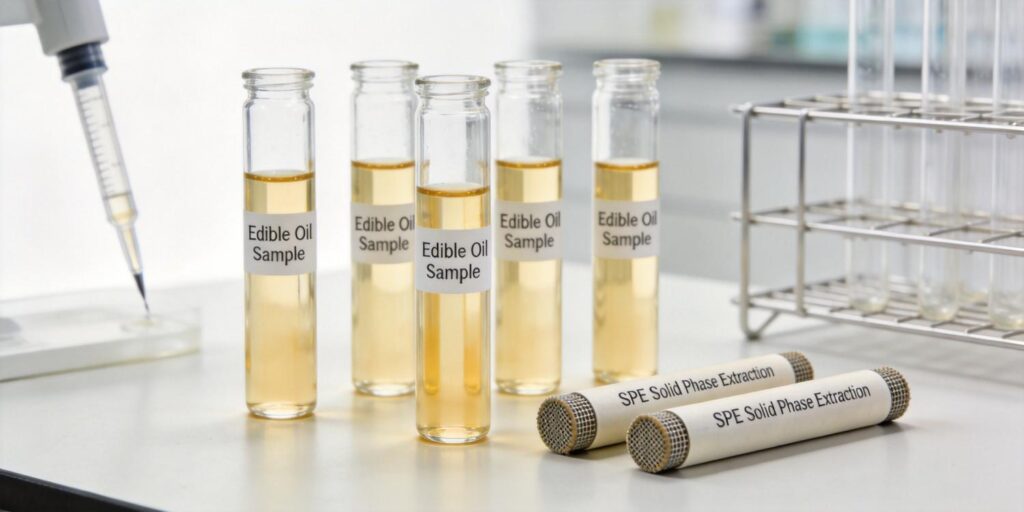
SPE purification of edible oil extracts for contaminant testing

SPE Cleanup Methods for Edible Oil Contaminant Testing

Analytical Challenges of Edible Oil Matrices Edible oils present one of the most challenging matrices for analytical chemists due to their complex composition dominated by triglycerides, fatty acids, and other lipids. These matrices contain high concentrations of non-polar compounds that can interfere with contaminant detection, particularly when analyzing trace-level pesticides and polycyclic aromatic hydrocarbons (PAHs).

SPE Cleanup Methods for Edible Oil Contaminant Testing Read More »

SPE purification of herbal tea extracts before LC-MS analysis

SPE Cleanup for LC-MS Analysis of Herbal Teas

Complex Chemical Composition of Herbal Teas Herbal teas represent one of the most chemically complex matrices encountered in analytical chemistry, containing hundreds to thousands of bioactive compounds that vary significantly based on plant species, growing conditions, and processing methods. These beverages typically contain phenolic acids, flavonoids, tannins, alkaloids, terpenoids, pigments, and various volatile compounds that

SPE Cleanup for LC-MS Analysis of Herbal Teas Read More »

SPE extraction of plasticizers from food packaging migration test samples

SPE Extraction of Plasticizers from Food Packaging Migration Tests

Migration Testing Requirements for Food Packaging Food packaging migration testing represents a critical component of food safety assessment, designed to evaluate the potential transfer of substances from packaging materials into food products. Regulatory bodies worldwide, including the FDA, EFSA, and various national authorities, mandate comprehensive migration testing to ensure consumer protection from potentially harmful chemicals

SPE Extraction of Plasticizers from Food Packaging Migration Tests Read More »

SPE purification workflow for chocolate sample extracts

SPE Cleanup of Chocolate Samples for Contaminant Analysis

Analytical Challenges in Chocolate Matrices Chocolate represents one of the most challenging food matrices for contaminant analysis due to its complex composition. The primary components—cocoa solids, cocoa butter, sugar, and milk solids—create a heterogeneous mixture that interferes with analytical detection methods. The high lipid content (typically 25-35% in dark chocolate) presents significant challenges for sample

SPE Cleanup of Chocolate Samples for Contaminant Analysis Read More »

SPE extraction of flavor compounds from beverage samples

SPE Extraction of Trace Flavor Compounds in Beverage Analysis

Importance of Flavor Compound Profiling in Beverage Analysis Flavor compound profiling represents a critical analytical frontier in beverage science, where subtle aromatic nuances define product identity, quality, and consumer acceptance. The volatile and semivolatile species responsible for a beverage’s bouquet—such as esters, aldehydes, terpenes, and phenolic compounds—exist at trace levels yet exert profound sensory impact.

SPE Extraction of Trace Flavor Compounds in Beverage Analysis Read More »

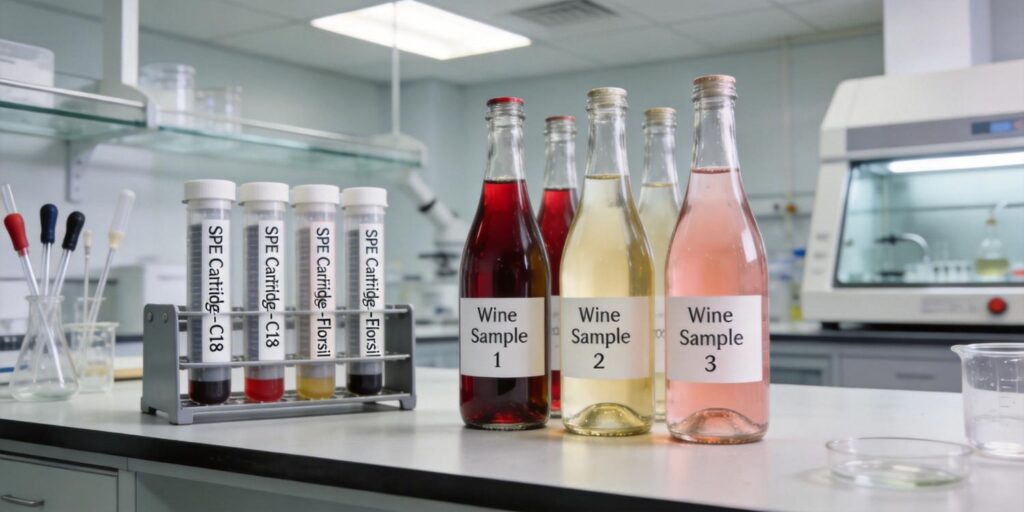
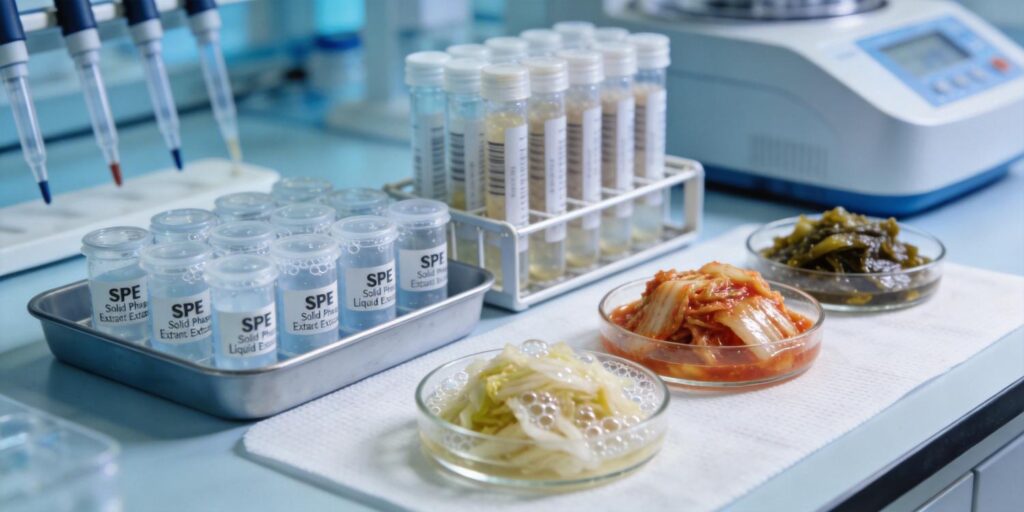
SPE purification of fermented food extracts before LC-MS testing

SPE Cleanup for LC-MS Analysis of Fermented Food Products

1. Chemical Complexity of Fermented Foods Fermented food products represent some of the most analytically challenging matrices in food science. From wine and beer to cheese, yogurt, kimchi, and soy sauce, these products contain a complex mixture of compounds generated through microbial metabolism. The fermentation process transforms raw materials into products containing organic acids (lactic,

SPE Cleanup for LC-MS Analysis of Fermented Food Products Read More »

SPE cartridge cleanup used for detecting hormone residues in milk

Improving Detection of Veterinary Hormones in Milk Using SPE

Hormone Residue Monitoring in Dairy Production Veterinary hormone monitoring in dairy production represents a critical food safety challenge that demands sophisticated analytical approaches. The detection of steroid hormones, corticosteroids, and other veterinary drug residues in milk requires methodologies that can achieve detection limits in the parts-per-billion (ppb) or even parts-per-trillion (ppt) range to comply with

Improving Detection of Veterinary Hormones in Milk Using SPE Read More »

Shopping Cart
Poseidon Scientific
Privacy Overview

This website uses cookies so that we can provide you with the best user experience possible. Cookie information is stored in your browser and performs functions such as recognising you when you return to our website and helping our team to understand which sections of the website you find most interesting and useful.