MAX SPE cartridge extraction of acidic analytes

SPE Cartridge Selection for Acidic Analytes

Chemistry of Acidic Analytes Acidic analytes represent a broad class of compounds characterized by their ability to donate protons, typically containing functional groups such as carboxylic acids, phenols, sulfonic acids, or phosphonic acids. These compounds exhibit unique chemical behavior that directly impacts their interaction with solid-phase extraction (SPE) sorbents. Understanding their fundamental properties is crucial […]

SPE Cartridge Selection for Acidic Analytes Read More »

MCX SPE cartridge extracting basic analytes

How to Select SPE Cartridges for Basic Compounds

Properties of Basic Analytes Basic compounds represent a diverse class of analytes characterized by their ability to accept protons or donate electron pairs. These compounds typically contain nitrogen atoms with lone electron pairs, such as amines, alkaloids, pharmaceuticals, and various drug metabolites. The fundamental property governing their behavior in solid-phase extraction (SPE) is their pKa

How to Select SPE Cartridges for Basic Compounds Read More »

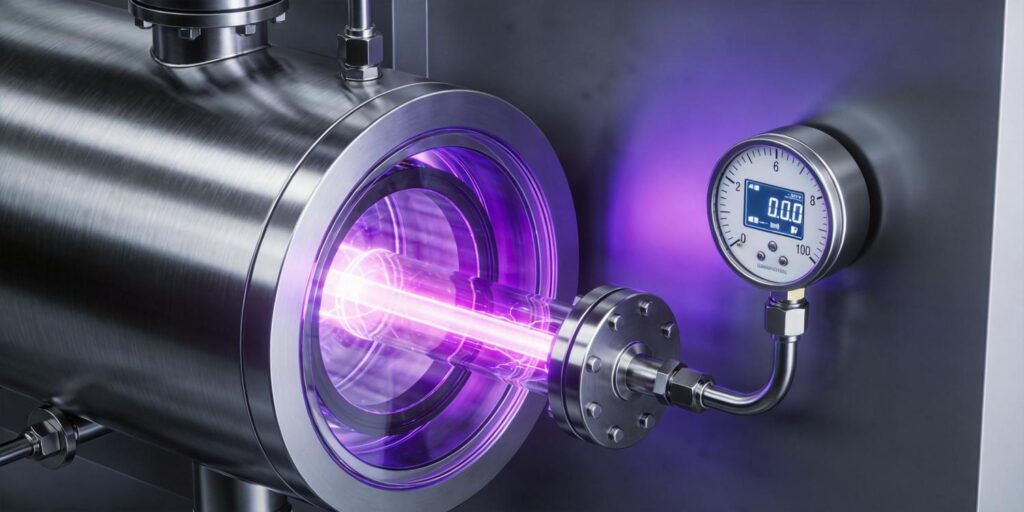
Cold cathode vacuum gauge installed on PVD coating chamber

High Vacuum Monitoring in PVD Systems

PVD Vacuum Stages: From Roughing to Deposition Physical Vapor Deposition (PVD) processes—sputtering, evaporation, and cathodic arc—rely on controlled vacuum environments to achieve line-of-sight atom transport, minimize oxidation, and ensure dense, adherent films. Each stage imposes distinct vacuum demands that directly affect coating quality, deposition rate, and system uptime. The typical PVD cycle includes: Load-lock and

High Vacuum Monitoring in PVD Systems Read More »

SPE cartridges used in environmental water testing laboratory

SPE Cartridge Selection for Environmental Water Testing

Typical Environmental Contaminants in Water Testing Environmental water testing requires comprehensive analysis of diverse contaminants that pose risks to human health and ecosystems. The primary categories include: Pesticides and Herbicides Triazine herbicides (atrazine, simazine), organophosphorus pesticides, carbamates, and chlorinated pesticides are routinely monitored. Research demonstrates that solid-phase extraction enables detection at sub-parts-per-trillion levels for compounds

SPE Cartridge Selection for Environmental Water Testing Read More »

Industrial vacuum transmitter wiring close-up

Common Wiring Mistakes in Vacuum Gauge Installation

Incorrect Polarity: The Most Common and Costly Mistake Connecting 24 V DC power with reversed polarity is the single most frequent wiring error when installing vacuum gauges in research labs, semiconductor tools, or vacuum heat-treatment systems. Both the VG-SP205 Pirani Vacuum Transmitter and VG-SM225 Cold Cathode Vacuum Gauge from Poseidon Scientific incorporate internal reverse-polarity protection

Common Wiring Mistakes in Vacuum Gauge Installation Read More »

Pirani vacuum transmitter installed in laboratory vacuum experiment

How to Choose a Vacuum Gauge for Research Laboratories

Lab Vacuum Requirements: Understanding the Research Environment Research laboratories in universities, national labs, and R&D centers demand vacuum systems that deliver repeatable, contamination-free performance without the high capital budgets or long lead times of industrial production tools. Typical applications include mass spectrometers (source and analyzer chambers), scanning electron microscopes (SEM column and sample stage), vacuum

How to Choose a Vacuum Gauge for Research Laboratories Read More »

SPE cartridge preparation for LC MS analysis

Choosing SPE Cartridges for LC-MS Applications

1. Importance of Clean Extracts for LC-MS Liquid chromatography-mass spectrometry (LC-MS) has become the gold standard for sensitive and selective analysis across pharmaceutical, environmental, and clinical applications. However, the success of any LC-MS analysis hinges on the quality of sample preparation, particularly the cleanliness of extracts. Clean extracts are not merely desirable—they are essential for

Choosing SPE Cartridges for LC-MS Applications Read More »

Vacuum transmitter wired to PLC inside industrial control cabinet

Vacuum Gauge Signal Integration with PLC Systems

Output Signal Types Available on Poseidon Vacuum Gauges Modern PLC-based automation systems require vacuum gauges that deliver clean, reliable signals without custom converters or excessive integration effort. The VG-SP205 Pirani Vacuum Transmitter and VG-SM225 Cold Cathode Vacuum Gauge from Poseidon Scientific are engineered for direct compatibility with industrial control architectures. Both models provide two primary

Vacuum Gauge Signal Integration with PLC Systems Read More »

visual comparison of reversed phase and mixed mode SPE extraction

Reversed-Phase vs Mixed-Mode SPE: Which One Should You Use?

Fundamentals of Reversed-Phase SPE Reversed-phase solid-phase extraction (SPE) is one of the most widely used sample preparation techniques in analytical laboratories. This method relies on hydrophobic interactions between non-polar analytes and non-polar stationary phases. The fundamental principle involves partitioning compounds between a polar aqueous sample matrix and a non-polar solid phase, typically composed of silica

Reversed-Phase vs Mixed-Mode SPE: Which One Should You Use? Read More »

Cold cathode vacuum gauge mounted on industrial chamber

How Cold Cathode Gauges Handle Contamination

Ionization Principle Behind Cold Cathode Gauges Cold cathode vacuum gauges, such as the Poseidon Scientific VG-SM225 Cold Cathode Vacuum Transmitter, operate on the Penning discharge principle—also known as a crossed-field or magnetron discharge. A permanent NdFeB magnet generates an axial field of approximately 100 Gauss while a high negative voltage (startup at –2500 V, steady-state

How Cold Cathode Gauges Handle Contamination Read More »

Shopping Cart
Poseidon Scientific
Privacy Overview

This website uses cookies so that we can provide you with the best user experience possible. Cookie information is stored in your browser and performs functions such as recognising you when you return to our website and helping our team to understand which sections of the website you find most interesting and useful.