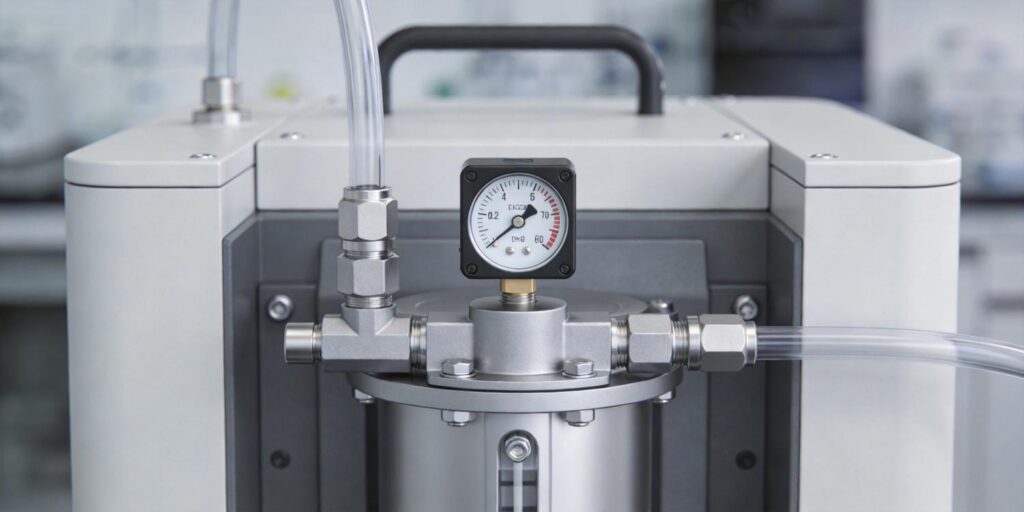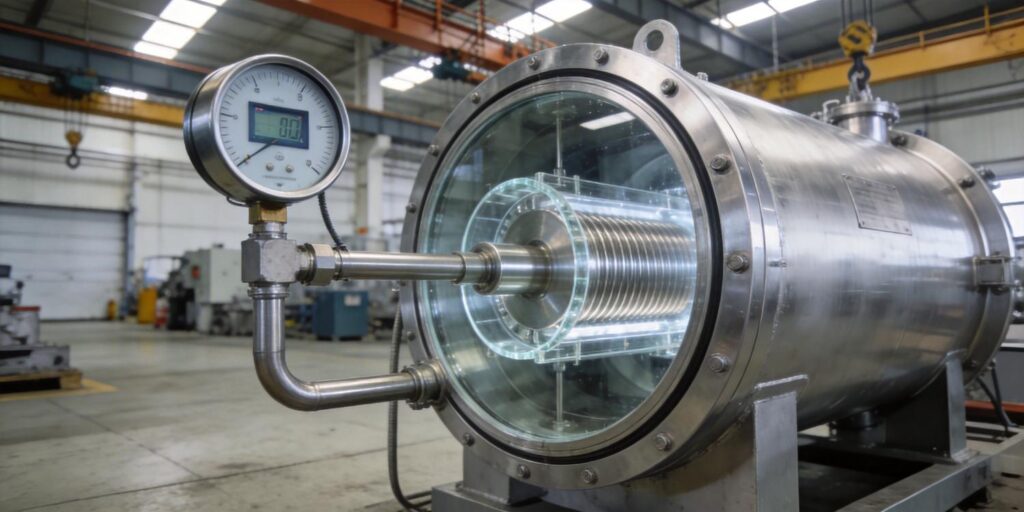
Cold cathode vacuum gauge installed on coating chamber

Cold Cathode Gauge Signal Fluctuation at Transition Pressure

Cold Cathode Gauge Signal Fluctuation at Transition Pressure In vacuum systems that cycle repeatedly between atmosphere and high vacuum, the pressure region around 10−3 Torr is the most dynamic—and the most prone to signal instability. At this exact transition the flow regime shifts from viscous (continuum) to molecular, gas density drops sharply, and the Penning […]

Cold Cathode Gauge Signal Fluctuation at Transition Pressure Read More »

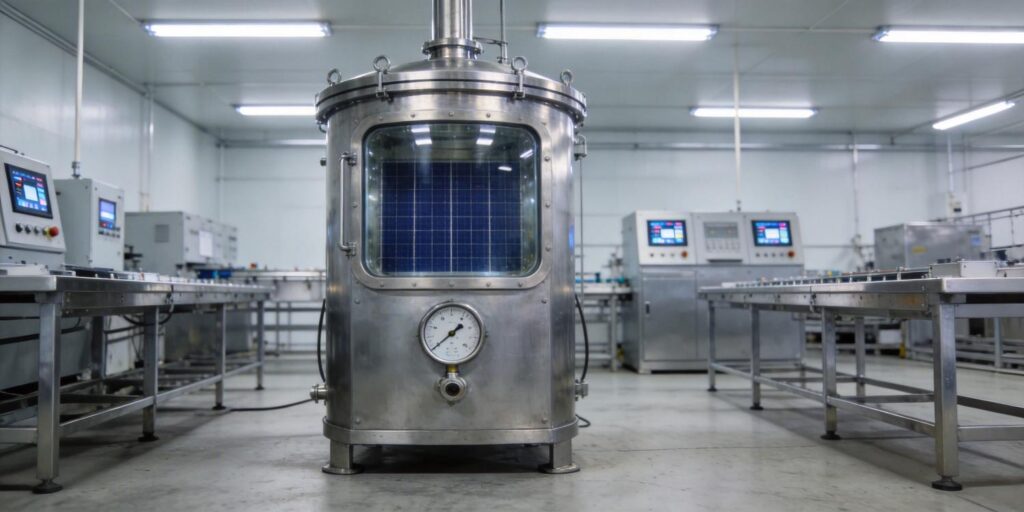
Vacuum gauge mounted on industrial drying oven pipeline

Designing Vacuum Monitoring for Vacuum Drying Ovens

Vacuum drying ovens are the workhorse of lithium-ion battery electrode production, pharmaceutical powder processing, and high-precision optics manufacturing. By combining controlled heat with reduced pressure, these ovens remove bound and adsorbed moisture far faster and more uniformly than atmospheric drying—often cutting cycle times by 50 % while achieving residual moisture levels below 10 ppm. Yet

Designing Vacuum Monitoring for Vacuum Drying Ovens Read More »

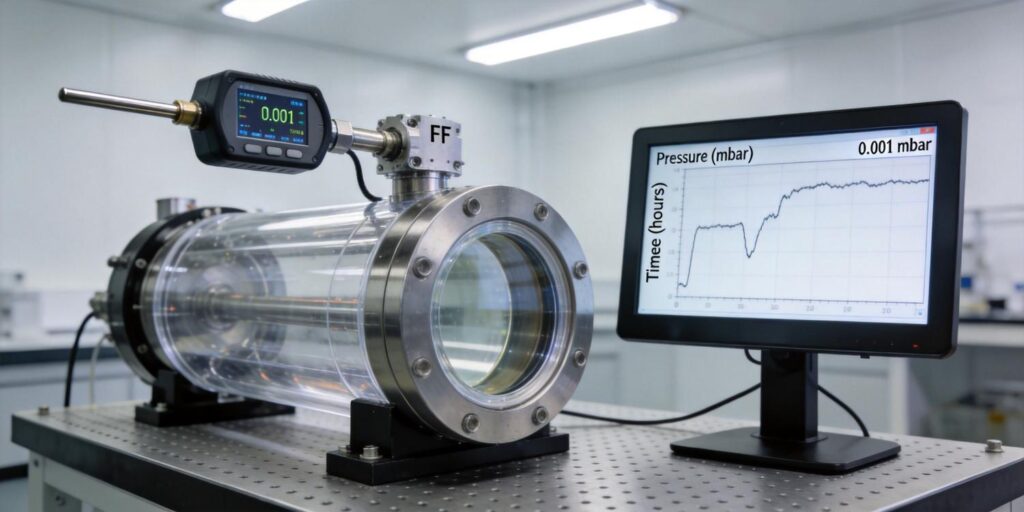
WAX SPE cartridge extracting phenolic acids from plant sample

WAX SPE Cleanup Strategy for Phenolic Acid Analysis in Plant Samples

Phenolic acids represent a critical class of phytochemicals in plant samples, serving as key antioxidants and bioactive compounds. Their analysis, however, is often complicated by complex plant matrices containing pigments, sugars, and other interfering substances. A well-designed Weak Anion Exchange (WAX) Solid-Phase Extraction (SPE) cleanup strategy provides an effective solution for isolating phenolic acids with

WAX SPE Cleanup Strategy for Phenolic Acid Analysis in Plant Samples Read More »

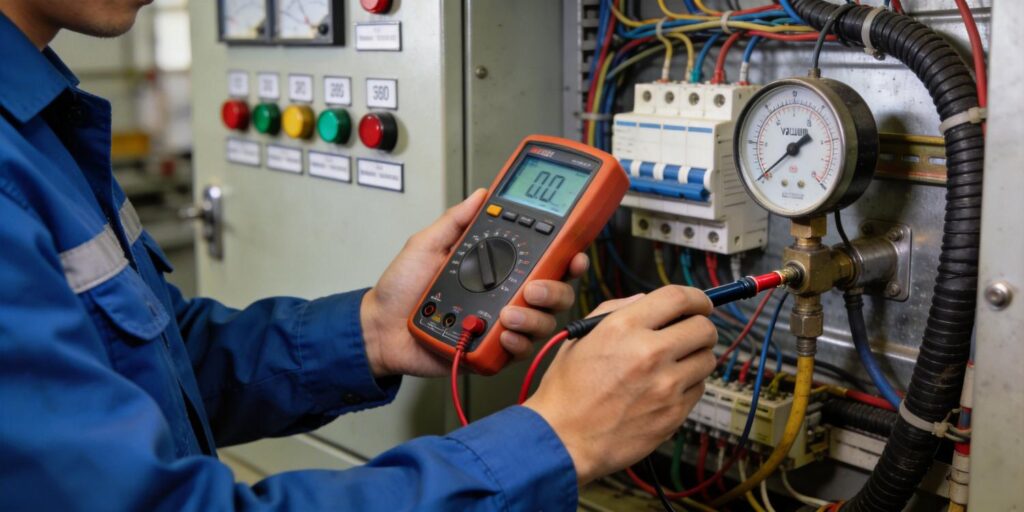
SPE cartridge extracting antibiotics from wastewater sample

SPE Method Development for Trace Antibiotic Detection in Wastewater

Target Antibiotic Classes: Understanding Polarity and pKa Ranges Developing an effective SPE method for trace antibiotic detection in wastewater begins with understanding the physicochemical properties of target compounds. The three major antibiotic classes—sulfonamides, fluoroquinolones, and macrolides—exhibit diverse polarity and ionization characteristics that directly influence SPE retention and elution strategies. Sulfonamides Sulfonamide antibiotics typically contain an

SPE Method Development for Trace Antibiotic Detection in Wastewater Read More »

Two vacuum gauges mounted on industrial vacuum pipeline

How to Verify Vacuum Gauge Accuracy Without a Reference Standard

In vacuum systems for mass spectrometry, semiconductor processing, vacuum heat treatment, and lithium-ion battery production, gauge accuracy directly impacts process yield, safety, and repeatability. Yet most production environments lack access to a certified reference standard or a full calibration chamber. Poseidon Scientific’s VG-SP205 Pirani Vacuum Transmitter and VG-SM225 Cold Cathode Vacuum Gauge are factory-calibrated against

How to Verify Vacuum Gauge Accuracy Without a Reference Standard Read More »

laboratory troubleshooting inconsistent SPE results

SPE Troubleshooting Guide for Poor Reproducibility in Sample Preparation

Identifying Reproducibility Issues in SPE Workflows Solid-phase extraction (SPE) is renowned for its ability to deliver improved recovery and reproducibility over conventional liquid extractions, but achieving consistent results requires careful attention to workflow parameters. According to forensic science literature, “SPE recoveries should exceed 90% absolute recovery. If you don’t get that kind of recovery you

SPE Troubleshooting Guide for Poor Reproducibility in Sample Preparation Read More »

Vacuum gauge installed on gas-loaded industrial chamber

Vacuum Gauge Performance in High Gas Load Processes

In high-throughput vacuum processes such as reactive sputtering, plasma-enhanced CVD, and large-scale PVD coating, continuous gas injection creates significant gas loads—often 10–100 Torr·L/s or more. Maintaining stable process pressure while pumping away the introduced gas demands precise, repeatable vacuum measurement. Yet many gauges struggle under these conditions: thermal sensors drift with gas composition changes, while

Vacuum Gauge Performance in High Gas Load Processes Read More »

Cold cathode vacuum gauge mounted on industrial system

Why Cold Cathode Gauges Are More Robust Than Hot Cathode in Industrial Environments

In demanding industrial environments—physical vapor deposition (PVD), chemical vapor deposition (CVD), vacuum metallurgy, and heat-treatment furnaces—vacuum gauges face constant exposure to vibration, process-gas contamination, thermal cycling, and occasional pressure spikes. A gauge failure in these settings can halt a multi-million-dollar production line for hours or days. Hot-cathode ionization gauges (such as Bayard-Alpert or triode types)

Why Cold Cathode Gauges Are More Robust Than Hot Cathode in Industrial Environments Read More »

HLB and WAX SPE cartridges compared in laboratory workflow

Choosing Between HLB and WAX SPE for Acidic Compound Extraction

Chemical Differences Between Reversed-Phase and Anion-Exchange SPE When selecting solid-phase extraction (SPE) sorbents for acidic compound isolation, understanding the fundamental chemical differences between reversed-phase and anion-exchange mechanisms is crucial. Hydrophilic-Lipophilic Balanced (HLB) sorbents represent the gold standard in reversed-phase SPE, constructed with water-wettable copolymers that are stable across the entire pH range (pH 0-14). These

Choosing Between HLB and WAX SPE for Acidic Compound Extraction Read More »

Vacuum gauge installed on lithium battery manufacturing system

Vacuum Gauge Selection for Lithium Battery Cell Production

Lithium-ion battery cell production operates under relentless pressure for yield, safety, and cost control. Every trace of moisture must be eliminated before electrolyte filling—otherwise residual water reacts with LiPF₆ to form HF, corroding electrodes, reducing capacity, and creating safety hazards. Vacuum drying of electrode coils and vacuum-assisted electrolyte filling are therefore non-negotiable process steps. Choosing

Vacuum Gauge Selection for Lithium Battery Cell Production Read More »

Shopping Cart
Poseidon Scientific
Privacy Overview

This website uses cookies so that we can provide you with the best user experience possible. Cookie information is stored in your browser and performs functions such as recognising you when you return to our website and helping our team to understand which sections of the website you find most interesting and useful.