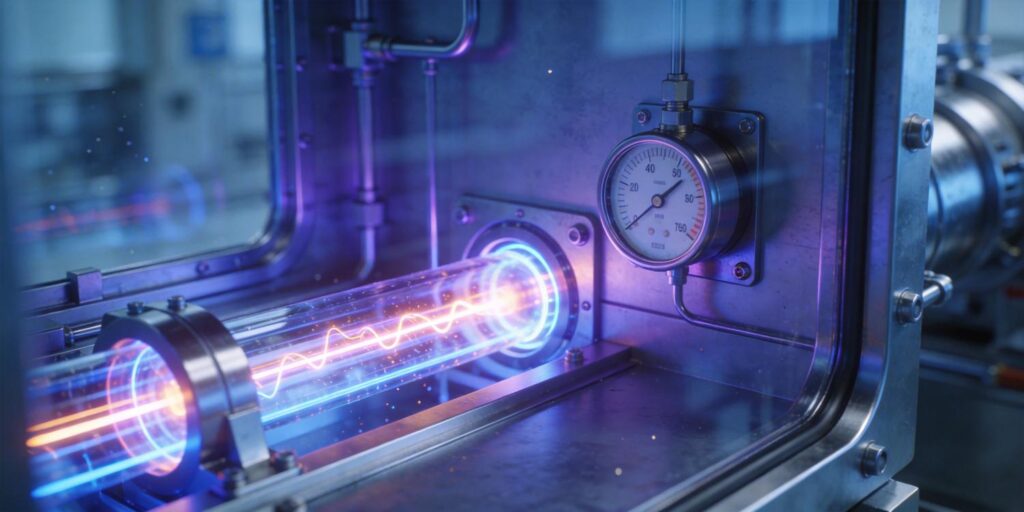
SCADA screen displaying vacuum pressure data from transmitters

Integrating Vacuum Transmitters into SCADA Monitoring Systems

Integrating Vacuum Transmitters into SCADA Monitoring Systems In modern industrial vacuum processes—from semiconductor fabrication and mass spectrometry to vacuum heat treatment and scientific instrumentation—real-time monitoring is essential for process stability, safety, and yield optimization. Vacuum transmitters such as the VG-SP205 Pirani Vacuum Transmitter and VG-SM225 Cold Cathode Vacuum Transmitter from Poseidon Scientific deliver reliable, cost-effective […]

Integrating Vacuum Transmitters into SCADA Monitoring Systems Read More »

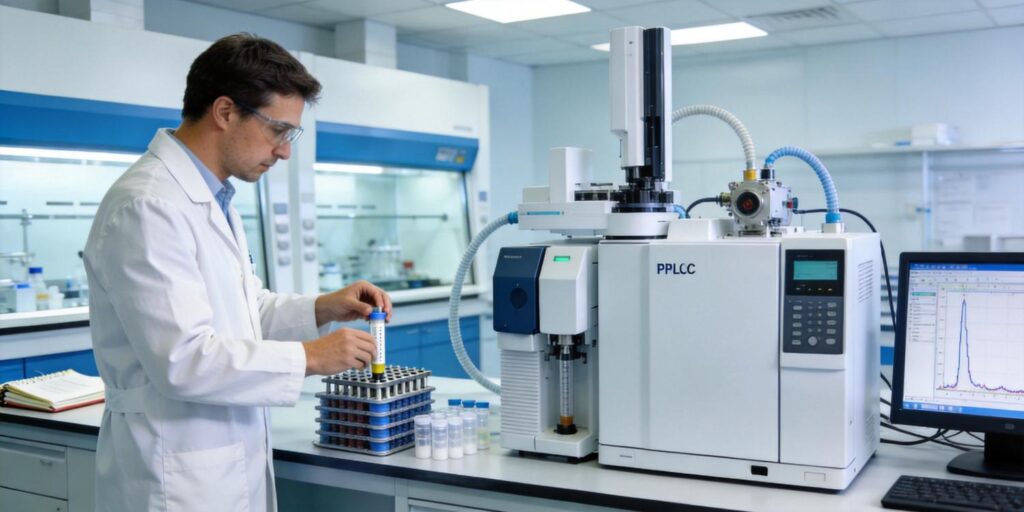
SPE extraction workflow analyzing veterinary drug residues in food samples

SPE Sample Preparation for LC-MS Analysis of Veterinary Drugs

1. Veterinary Drugs Commonly Monitored in Food Products The analysis of veterinary drug residues in food products represents a critical component of food safety monitoring programs worldwide. These compounds span multiple therapeutic classes, each presenting unique analytical challenges for LC-MS detection. The most commonly monitored veterinary drugs include: Antibacterial Agents Sulfonamides (sulfamethazine, sulfadimethoxine), tetracyclines (oxytetracycline,

SPE Sample Preparation for LC-MS Analysis of Veterinary Drugs Read More »

laboratory SPE wash step improving sample cleanup efficiency

Optimizing SPE Wash Steps to Improve Sample Cleanup

Role of Wash Steps in SPE Workflows Solid-phase extraction (SPE) wash steps serve as the critical bridge between sample loading and analyte elution, functioning as the primary mechanism for removing matrix interferences while preserving target compounds. As described in SPE literature, “To remove unwanted, weakly retained materials, wash the packing with solutions that are stronger

Optimizing SPE Wash Steps to Improve Sample Cleanup Read More »

Vacuum gauge calibration setup in industrial lab

Best Practices for Vacuum Gauge Calibration in Production Facilities

In high-volume vacuum production environments—semiconductor fabs, PVD coating lines, and vacuum heat-treatment facilities—gauge calibration is not a periodic checkbox but a cornerstone of process capability. A drifting vacuum gauge can introduce pressure offsets that cascade into film-thickness variation, etch-depth errors, or inconsistent hardness profiles, directly eroding yield and increasing scrap costs. Poseidon Scientific designed the

Best Practices for Vacuum Gauge Calibration in Production Facilities Read More »

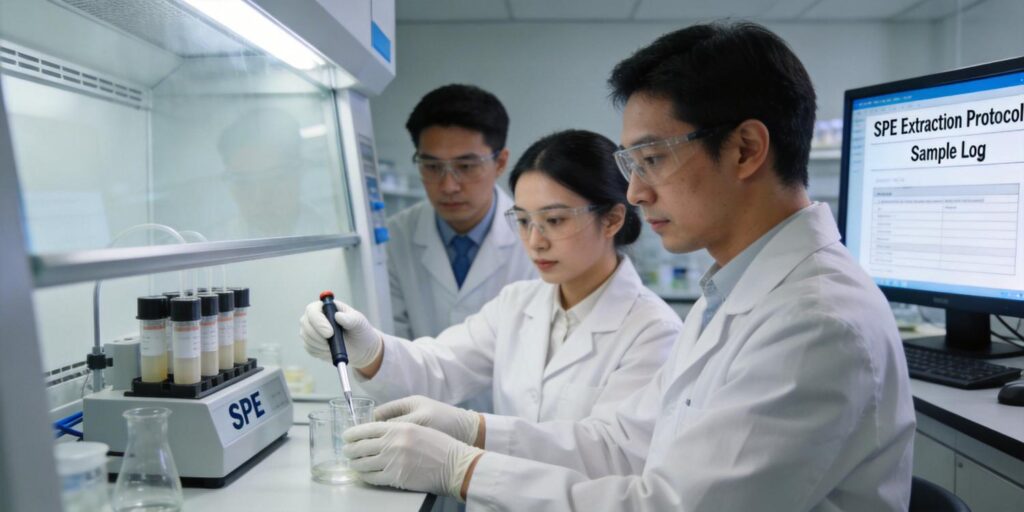
SPE cartridge concentrating trace contaminants from environmental water samples

Using SPE to Concentrate Trace Contaminants in Environmental Samples

Environmental Contaminants Monitored at Trace Levels Environmental monitoring programs routinely target contaminants at part-per-billion (ppb) and part-per-trillion (ppt) concentrations. These trace-level pollutants include pesticides (triazines, organophosphates, carbamates), pharmaceuticals, industrial chemicals (PCBs, PAHs, phenols), endocrine disruptors, and heavy metals. The challenge for analytical chemists is that these compounds exist at concentrations far below the detection limits

Using SPE to Concentrate Trace Contaminants in Environmental Samples Read More »

Vacuum gauge monitoring rapid pressure changes in process chamber

How Vacuum Gauge Response Time Affects Process Stability

In vacuum-based processes such as physical vapor deposition (PVD), reactive-ion etching, and vacuum heat treatment, pressure stability directly determines film uniformity, etch rate repeatability, and part quality. Even brief pressure excursions can produce defects that scrap expensive substrates or require costly rework. The vacuum gauge is the primary process variable sensor feeding the PID control

How Vacuum Gauge Response Time Affects Process Stability Read More »

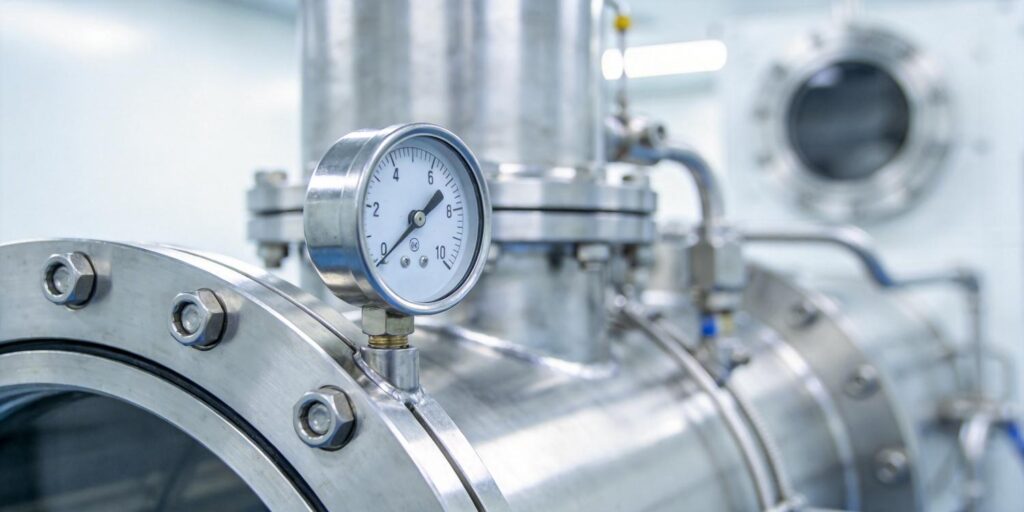
Dual vacuum gauges installed on stainless steel manifold

Why Wide-Range Vacuum Monitoring Requires Two Technologies

In modern vacuum systems for thin-film deposition, semiconductor processing, analytical instrumentation, and industrial heat treatment, pressure must be monitored continuously from atmosphere down to 10⁻⁷ Torr. A single gauge technology cannot deliver accurate, repeatable readings across this six-decade span without compromising response time, linearity, or durability. Poseidon Scientific developed the VG-SP205 Pirani Vacuum Transmitter specifically

Why Wide-Range Vacuum Monitoring Requires Two Technologies Read More »

SPE cartridge cleanup removing endogenous compounds from plasma samples

SPE Workflow for Removing Endogenous Interferences in Plasma Samples

1. Types of Endogenous Compounds Interfering in LC-MS Analysis Plasma samples present a complex matrix challenge for LC-MS analysis due to numerous endogenous compounds that can interfere with accurate analyte detection. These interfering substances fall into several key categories: Proteinaceous Components Proteins represent the most abundant endogenous interferents in plasma, comprising approximately 60-80 g/L. Albumin,

SPE Workflow for Removing Endogenous Interferences in Plasma Samples Read More »

Technician diagnosing vacuum gauge showing unstable pressure

Common Causes of False Pressure Readings in High Vacuum Systems

In high-vacuum systems used for thin-film deposition, analytical instrumentation, and semiconductor processing, false pressure readings can trigger unnecessary alarms, disrupt PID control loops, or lead to process defects that reduce yield. Even small offsets—whether 10 % low or one decade high—can extend pump-down times, cause premature valve actuation, or mask real leaks. Poseidon Scientific’s VG-SM225

Common Causes of False Pressure Readings in High Vacuum Systems Read More »

mixed mode SPE cartridge used for complex laboratory sample cleanup

Improving Sample Cleanup Efficiency with Mixed-Mode SPE Sorbents

Principle of Mixed-Mode SPE Interactions Mixed-mode solid phase extraction represents a sophisticated advancement in sample preparation technology that combines multiple retention mechanisms within a single sorbent. According to established literature, mixed-mode SPE columns are prevalent in drug extractions because they offer multiple binding mechanisms for improved sensitivity and excellent sample cleanup. A mixed-mode sorbent employs

Improving Sample Cleanup Efficiency with Mixed-Mode SPE Sorbents Read More »

Shopping Cart
Poseidon Scientific
Privacy Overview

This website uses cookies so that we can provide you with the best user experience possible. Cookie information is stored in your browser and performs functions such as recognising you when you return to our website and helping our team to understand which sections of the website you find most interesting and useful.