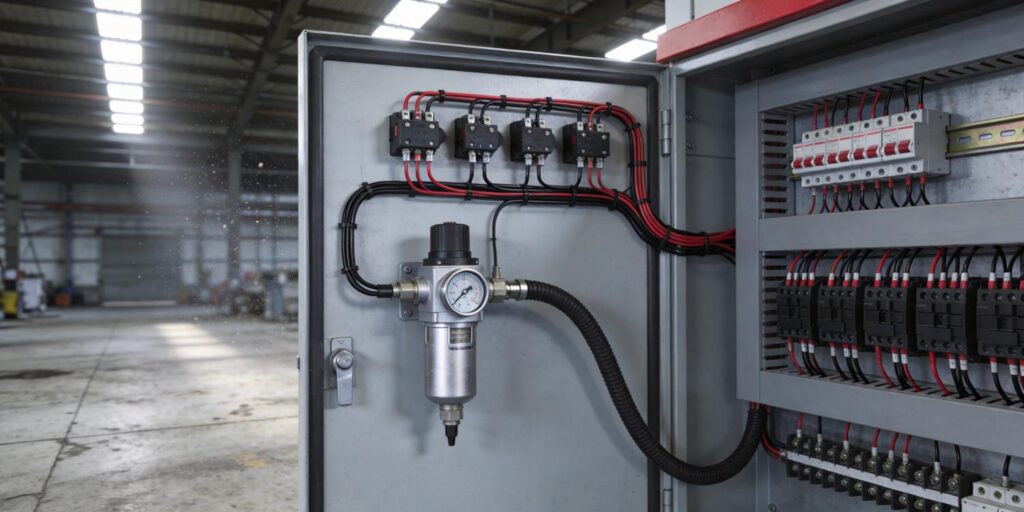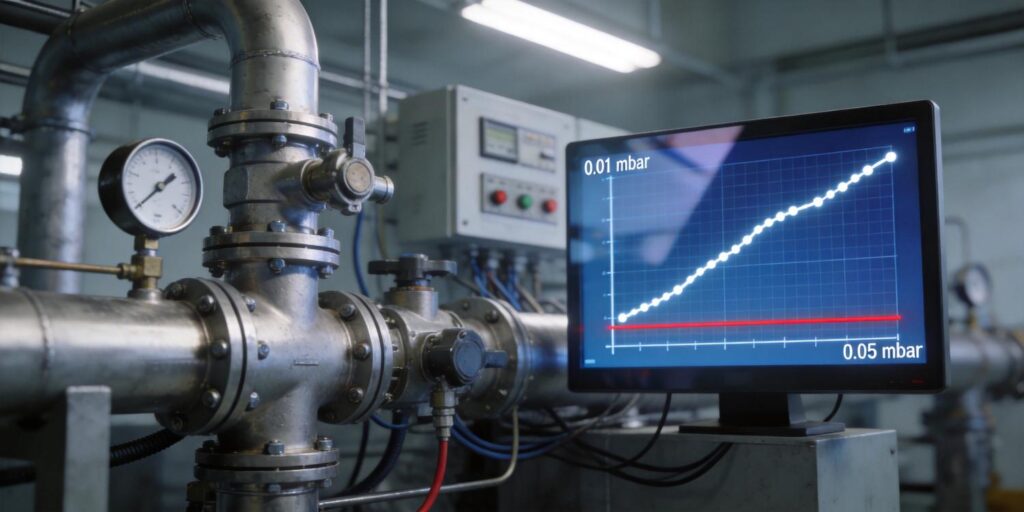
Vacuum transmitter wired to PLC inside industrial cabinet

4-20mA vs 0-10V Vacuum Gauge Output: Which Is More Stable in Industrial Environments?

4-20mA vs 0-10V Vacuum Gauge Output: Which Is More Stable in Industrial Environments? Industrial vacuum systems—whether in semiconductor fabs, PVD coating lines, or analytical instruments—demand reliable pressure signals that survive electromagnetic interference, long cable runs, and PLC integration. Two analog standards dominate: the 4-20 mA current loop and the 0-10 V voltage output. At Poseidon […]

4-20mA vs 0-10V Vacuum Gauge Output: Which Is More Stable in Industrial Environments? Read More »

WCX SPE cartridge extraction of amine compounds

WCX SPE Method for Extraction of Amines in Biological Samples

Amine-Containing Drug Compounds Overview Weak cation exchange (WCX) solid-phase extraction represents one of the most sophisticated approaches for isolating amine-containing drug compounds from complex biological matrices. These compounds encompass a broad spectrum of therapeutic agents including amphetamines, methamphetamine, phenylethylamine derivatives, and numerous basic pharmaceuticals that contain primary, secondary, or tertiary amine functional groups. According to

WCX SPE Method for Extraction of Amines in Biological Samples Read More »

Vacuum gauge mounted near vacuum chamber connection

Vacuum Gauge Placement Near Pump vs Near Chamber: Pressure Gradient Impact

Vacuum Gauge Placement Near Pump vs Near Chamber: Pressure Gradient Impact In vacuum systems ranging from mass spectrometers to PVD coating chambers, engineers often debate where to mount the vacuum gauge: directly on the process chamber or near the pump inlet. The choice is far from cosmetic. A seemingly small difference in mounting location can

Vacuum Gauge Placement Near Pump vs Near Chamber: Pressure Gradient Impact Read More »

Cold cathode vacuum gauge connector and flange detail

Selecting a PTR225N Compatible Cold Cathode Gauge: Critical Electrical Parameters to Verify

Selecting a PTR225N Compatible Cold Cathode Gauge: Critical Electrical Parameters to Verify In high-vacuum systems for mass spectrometry, scanning electron microscopes, and vacuum heat treatment, the Leybold PENNINGVAC PTR225N (and its variants) remains a trusted workhorse. Its compact design and reliable Penning discharge measurement from 5×10⁻³ mbar down to 1×10⁻⁸ mbar have made it a

Selecting a PTR225N Compatible Cold Cathode Gauge: Critical Electrical Parameters to Verify Read More »

WAX SPE cartridge extraction of weak acids

WAX SPE Protocol for Weak Acid Extraction

WAX Sorbent Chemistry Overview WAX (Weak Anion eXchange) SPE sorbents represent a sophisticated mixed-mode extraction technology designed specifically for strong acidic compounds. Unlike traditional single-mode sorbents, WAX employs a dual retention mechanism combining both ion-exchange and reversed-phase interactions. This innovative approach provides superior retention for strong acidic analytes, particularly those with pKa values below 1,

WAX SPE Protocol for Weak Acid Extraction Read More »

Pirani vacuum transmitter connected to industrial gas vacuum system

Why Pirani Gauges Drift When Switching Gas Types

Why Pirani Gauges Drift When Switching Gas Types In vacuum systems, engineers and procurement teams rely on Pirani gauges for reliable pressure monitoring from atmosphere down to roughly 10⁻³ Torr. Yet many users notice sudden, unexplained shifts in displayed pressure when the process gas changes—even when the true pressure has not moved. These “drifts” are

Why Pirani Gauges Drift When Switching Gas Types Read More »

MCX SPE extraction in clinical toxicology lab

Clinical Toxicology Sample Preparation Using MCX SPE

Drug Classes Commonly Analyzed in Clinical Toxicology Mixed-mode cation exchange (MCX) solid phase extraction (SPE) cartridges are particularly effective for analyzing basic and neutral drugs in clinical toxicology applications. The MCX sorbent combines hydrophobic interactions with strong cation exchange properties, making it ideal for compounds that are positively charged at acidic pH. Commonly analyzed drug

Clinical Toxicology Sample Preparation Using MCX SPE Read More »

alkaloid extraction using MCX SPE

MCX SPE Method for Alkaloid Extraction from Plant Samples

Alkaloid Chemistry Overview Alkaloids represent a diverse class of naturally occurring organic compounds that contain basic nitrogen atoms, typically derived from amino acids. These secondary metabolites are found in approximately 20% of plant species and serve various biological functions including defense mechanisms against herbivores. From a chemical perspective, alkaloids are characterized by their heterocyclic structures

MCX SPE Method for Alkaloid Extraction from Plant Samples Read More »

Pirani and cold cathode vacuum gauges installed on industrial vacuum line

How to Configure a Dual-Gauge System (Pirani + Cold Cathode) for Full-Range Measurement

Define Rough to High Vacuum Transition In vacuum systems for analytical instruments, vacuum furnaces, solar deposition tools, and coating equipment, pressure measurement spans two distinct regimes that no single gauge covers with optimal accuracy and reliability. Rough vacuum—typically from atmosphere down to approximately 10-3 Torr (or ~1.33 × 10⁻¹ Pa)—is the domain of mechanical pumps

How to Configure a Dual-Gauge System (Pirani + Cold Cathode) for Full-Range Measurement Read More »

Cold cathode vacuum gauge mounted on high vacuum chamber

Cold Cathode Ignition Threshold: Why Your Gauge Won’t Start Below 1E-2 mbar

Explain Cold Cathode Ionization Ignition Physics Cold-cathode ionization gauges, such as the Poseidon VG-SM225, operate on the Penning discharge principle. A high electric field (typically –2000 V working voltage, –2500 V at startup) extracts initial electrons via field emission from the cathode surface. These electrons are trapped in crossed electric and magnetic fields (~100 gauss

Cold Cathode Ignition Threshold: Why Your Gauge Won’t Start Below 1E-2 mbar Read More »

Shopping Cart
Poseidon Scientific
Privacy Overview

This website uses cookies so that we can provide you with the best user experience possible. Cookie information is stored in your browser and performs functions such as recognising you when you return to our website and helping our team to understand which sections of the website you find most interesting and useful.