Food Safety Testing

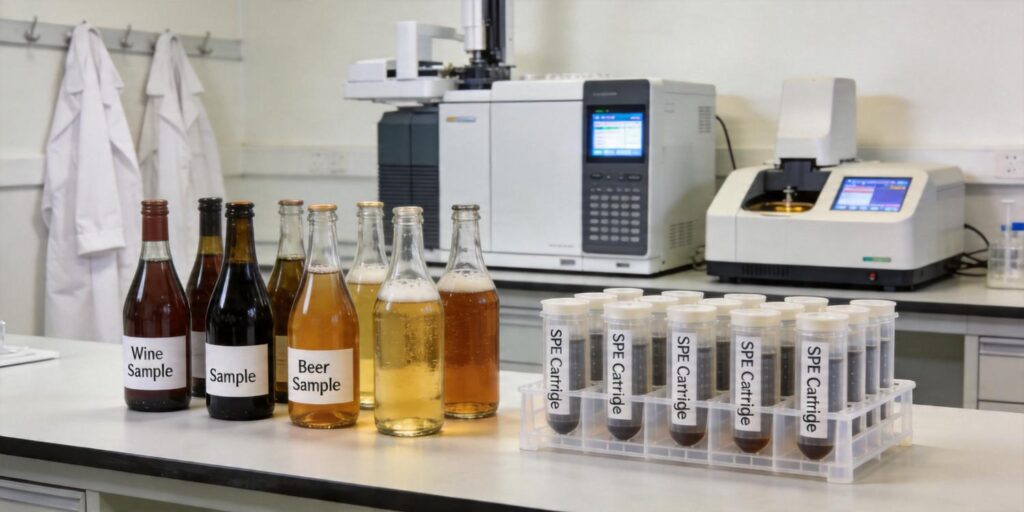
SPE extraction of flavor compounds from beverage samples

SPE Extraction of Trace Flavor Compounds in Beverage Analysis

Importance of Flavor Compound Profiling in Beverage Analysis Flavor compound profiling represents a critical analytical frontier in beverage science, where subtle aromatic nuances define product identity, quality, and consumer acceptance. The volatile and semivolatile species responsible for a beverage’s bouquet—such as esters, aldehydes, terpenes, and phenolic compounds—exist at trace levels yet exert profound sensory impact. […]

SPE Extraction of Trace Flavor Compounds in Beverage Analysis Read More »

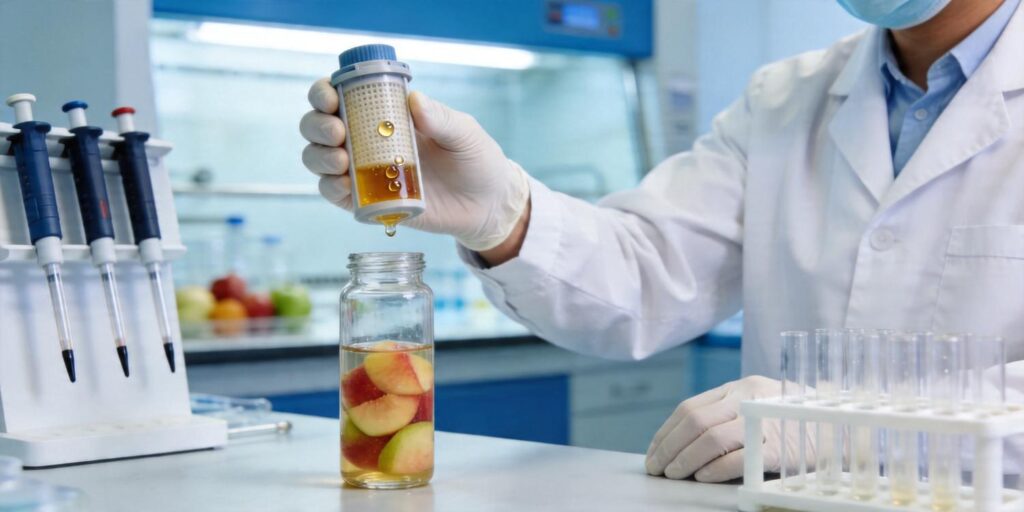
SPE purification of fermented food extracts before LC-MS testing

SPE Cleanup for LC-MS Analysis of Fermented Food Products

1. Chemical Complexity of Fermented Foods Fermented food products represent some of the most analytically challenging matrices in food science. From wine and beer to cheese, yogurt, kimchi, and soy sauce, these products contain a complex mixture of compounds generated through microbial metabolism. The fermentation process transforms raw materials into products containing organic acids (lactic,

SPE Cleanup for LC-MS Analysis of Fermented Food Products Read More »

SPE cartridge cleanup used for detecting hormone residues in milk

Improving Detection of Veterinary Hormones in Milk Using SPE

Hormone Residue Monitoring in Dairy Production Veterinary hormone monitoring in dairy production represents a critical food safety challenge that demands sophisticated analytical approaches. The detection of steroid hormones, corticosteroids, and other veterinary drug residues in milk requires methodologies that can achieve detection limits in the parts-per-billion (ppb) or even parts-per-trillion (ppt) range to comply with

Improving Detection of Veterinary Hormones in Milk Using SPE Read More »

SPE purification of beverage samples for polyphenol analysis

SPE Cleanup Methods for Polyphenol Analysis in Beverages

Challenges Analyzing Polyphenols in Complex Beverage Matrices Polyphenol analysis in beverages presents unique analytical challenges due to the complex nature of beverage matrices. Beverages like wine, tea, fruit juices, and soft drinks contain high concentrations of sugars, organic acids, pigments, and other interfering compounds that can mask or interfere with polyphenol detection. The alcohol content

SPE Cleanup Methods for Polyphenol Analysis in Beverages Read More »

SPE extraction of veterinary drug residues from animal tissue samples

SPE Approaches for Veterinary Drug Residue Testing

Common Veterinary Drugs Monitored in Food Veterinary drug residue testing in food products represents a critical component of food safety programs worldwide. The monitoring encompasses several classes of drugs that are commonly administered to food-producing animals for therapeutic, prophylactic, or growth-promoting purposes. According to established literature and regulatory frameworks, the primary drug classes monitored include:

SPE Approaches for Veterinary Drug Residue Testing Read More »

SPE purification workflow for detecting hormone residues in meat samples

SPE for Hormone Residue Analysis in Meat Samples

Regulatory Monitoring of Hormone Residues Global food safety authorities have established stringent regulations for hormone residue monitoring in meat products to protect consumer health and ensure fair trade practices. The European Union’s Directive 96/22/EC and subsequent amendments, along with the United States Food and Drug Administration’s (FDA) guidelines, set maximum residue limits (MRLs) for various

SPE for Hormone Residue Analysis in Meat Samples Read More »

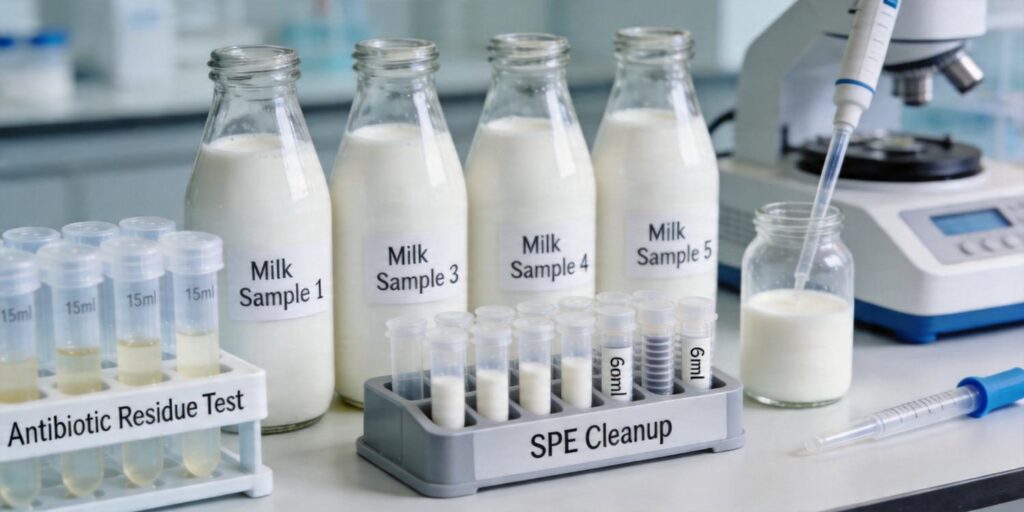
Laboratory workflow using SPE to analyze antibiotic residues in milk samples

SPE Sample Preparation for Antibiotic Residues in Milk

Regulatory Limits for Antibiotic Residues in Dairy Products Antibiotic residues in milk and dairy products are strictly regulated worldwide to ensure consumer safety and prevent antimicrobial resistance. Regulatory agencies including the FDA, EU Commission, and Codex Alimentarius establish Maximum Residue Limits (MRLs) for various antibiotic classes. These limits typically range from 4-100 μg/kg depending on

SPE Sample Preparation for Antibiotic Residues in Milk Read More »

Solid phase extraction workflow for mycotoxin cleanup in grain laboratory testing

Optimizing SPE for Mycotoxin Analysis in Grain Samples

Overview of Common Mycotoxins in Grain Mycotoxin contamination in grain represents one of the most significant food safety challenges facing the agricultural and food processing industries. Among the hundreds of mycotoxins identified, three classes dominate grain contamination profiles: aflatoxins, deoxynivalenol (DON), and zearalenone (ZEA). Aflatoxins: The Carcinogenic Threat Aflatoxins, particularly B1, B2, G1, and G2,

Optimizing SPE for Mycotoxin Analysis in Grain Samples Read More »

Solid phase extraction cleanup workflow for pesticide analysis in leafy vegetable samples

SPE Cleanup Strategies for Pesticide Residues in Leafy Vegetables

Challenges of Pesticide Residue Extraction from Leafy Matrices Leafy vegetables present unique analytical challenges for pesticide residue analysis due to their complex matrix composition. The primary interfering compounds include chlorophyll, plant waxes, pigments (carotenoids, anthocyanins), organic acids, sugars, and various other plant metabolites. These components can significantly interfere with chromatographic analysis and mass spectrometric detection,

SPE Cleanup Strategies for Pesticide Residues in Leafy Vegetables Read More »

SPE cartridge extracting veterinary drug residues from milk

SPE Extraction of Veterinary Drug Residues from Milk

Overview of Veterinary Drugs Monitored in Dairy Testing Veterinary drug residue monitoring in milk represents a critical component of food safety programs worldwide. Regulatory agencies including the FDA, EU, and Codex Alimentarius establish maximum residue limits (MRLs) for various drug classes to ensure consumer protection. The primary veterinary drugs monitored in dairy testing fall into

SPE Extraction of Veterinary Drug Residues from Milk Read More »

Shopping Cart
Poseidon Scientific
Privacy Overview

This website uses cookies so that we can provide you with the best user experience possible. Cookie information is stored in your browser and performs functions such as recognising you when you return to our website and helping our team to understand which sections of the website you find most interesting and useful.