Applications

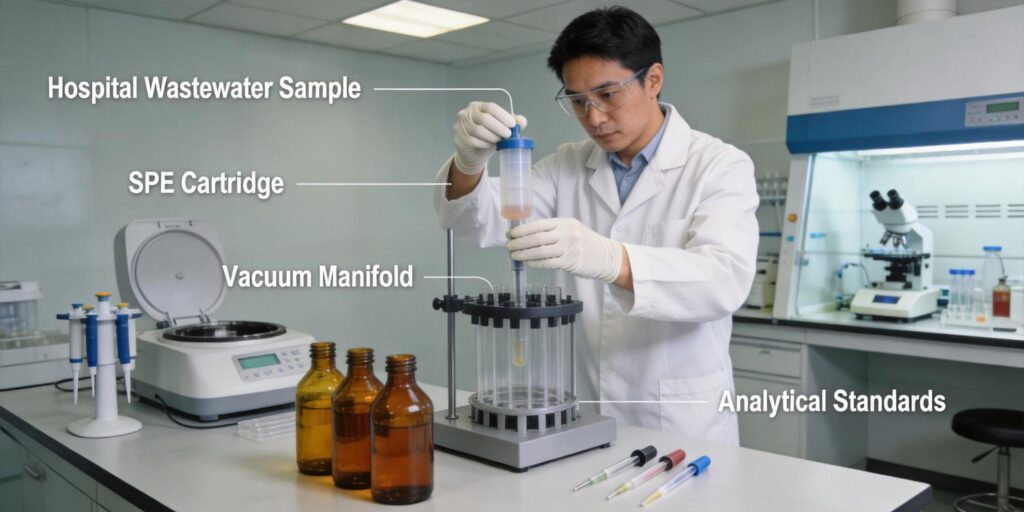
hormone contaminant extraction using SPE cartridge

SPE Method for Hormone Analysis in Environmental Water

Environmental Sources of Steroid Hormones Steroid hormones enter environmental water systems through multiple pathways, primarily from human and animal waste. Estrogens (estrone, estradiol, estriol), androgens (testosterone), progestogens (progesterone), and synthetic hormones (ethinylestradiol) are excreted in urine and feces, passing through wastewater treatment plants that often incompletely remove these compounds. Agricultural runoff containing livestock manure and […]

SPE Method for Hormone Analysis in Environmental Water Read More »

veterinary drug extraction from meat using SPE

Extracting Veterinary Drug Residues from Meat Using SPE

Regulatory Monitoring of Veterinary Drugs Veterinary drug residue monitoring in meat products represents a critical public health safeguard implemented by regulatory agencies worldwide. The detection of antibacterial drugs, sulfonamides, and other therapeutic agents in animal tissues requires robust analytical methodologies that can achieve detection limits at parts-per-billion (ppB) levels. As noted in the literature, “antibacterial

Extracting Veterinary Drug Residues from Meat Using SPE Read More »

antibiotic residue extraction from milk using HLB SPE

Using HLB SPE for Antibiotic Residue Analysis in Milk

Antibiotic Residue Regulations Overview Antibiotic residue analysis in milk represents a critical component of food safety monitoring worldwide. Regulatory frameworks such as the European Union’s Maximum Residue Limits (MRLs), the U.S. Food and Drug Administration’s tolerances, and China’s GB standards establish stringent requirements for veterinary drug residues in dairy products. These regulations typically specify detection

Using HLB SPE for Antibiotic Residue Analysis in Milk Read More »

PFAS extraction workflow using SPE cartridge

SPE Sample Preparation for PFAS Analysis in Drinking Water

Overview of PFAS Contamination in Drinking Water Per- and polyfluoroalkyl substances (PFAS) represent a class of synthetic chemicals that have become a significant environmental concern in drinking water systems worldwide. These compounds, characterized by their strong carbon-fluorine bonds, exhibit exceptional thermal and chemical stability, making them persistent in the environment and resistant to conventional water

SPE Sample Preparation for PFAS Analysis in Drinking Water Read More »

trace contaminant extraction using SPE

Using SPE to Concentrate Trace Environmental Contaminants

Trace Analysis Challenges in Environmental Monitoring Environmental contaminants often exist at ultratrace levels—typically in the part-per-billion (ppb) to part-per-trillion (ppt) range—posing significant analytical challenges. Unlike clinical samples where drug concentrations might be in the ppm or ppb range, environmental matrices require handling large sample volumes to obtain detectable analyte quantities. According to research from Tennessee

Using SPE to Concentrate Trace Environmental Contaminants Read More »

MCX SPE extraction in clinical toxicology lab

Clinical Toxicology Sample Preparation Using MCX SPE

Drug Classes Commonly Analyzed in Clinical Toxicology Mixed-mode cation exchange (MCX) solid phase extraction (SPE) cartridges are particularly effective for analyzing basic and neutral drugs in clinical toxicology applications. The MCX sorbent combines hydrophobic interactions with strong cation exchange properties, making it ideal for compounds that are positively charged at acidic pH. Commonly analyzed drug

Clinical Toxicology Sample Preparation Using MCX SPE Read More »

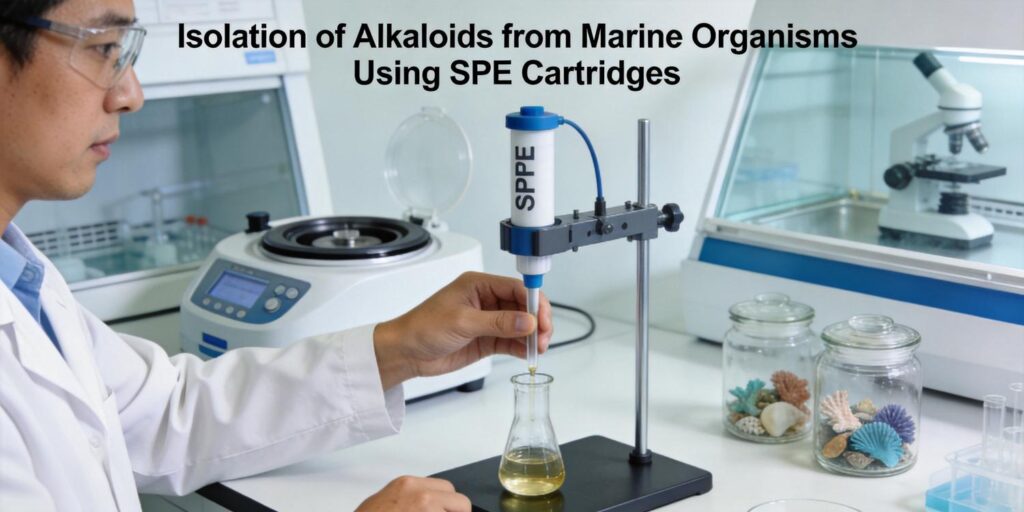
alkaloid extraction using MCX SPE

MCX SPE Method for Alkaloid Extraction from Plant Samples

Alkaloid Chemistry Overview Alkaloids represent a diverse class of naturally occurring organic compounds that contain basic nitrogen atoms, typically derived from amino acids. These secondary metabolites are found in approximately 20% of plant species and serve various biological functions including defense mechanisms against herbivores. From a chemical perspective, alkaloids are characterized by their heterocyclic structures

MCX SPE Method for Alkaloid Extraction from Plant Samples Read More »

organic acid extraction using MAX SPE cartridge

MAX SPE Cleanup Strategy for Organic Acid Analysis

Types of Organic Acids in Environmental Samples Environmental samples contain a diverse range of organic acids that require specialized cleanup strategies for accurate analysis. These include carboxylic acids such as formic, acetic, propionic, and butyric acids, which are commonly found in water, soil, and biological matrices. More complex acids like humic and fulvic acids present

MAX SPE Cleanup Strategy for Organic Acid Analysis Read More »

PFAS sample preparation using MAX SPE

MAX SPE Method for Extraction of Perfluorinated Compounds (PFAS)

PFAS Environmental Concern Overview Perfluorinated compounds (PFAS) represent one of the most pressing environmental challenges of our time. These synthetic chemicals, characterized by strong carbon-fluorine bonds, exhibit exceptional persistence in the environment and bioaccumulation potential. PFAS contamination has been detected globally in water sources, soil, and biological samples, raising significant public health concerns due to

MAX SPE Method for Extraction of Perfluorinated Compounds (PFAS) Read More »

environmental water extraction using HLB SPE

Developing an HLB SPE Method for Environmental Water Samples

Typical Contaminants in Environmental Water Samples Environmental water monitoring requires robust analytical methods to detect trace levels of emerging contaminants. Hydrophilic-Lipophilic Balanced (HLB) solid-phase extraction has become the gold standard for analyzing pharmaceuticals and hormones in water matrices due to its exceptional retention capabilities across a wide polarity range. Pharmaceutical residues commonly targeted include antibiotics

Developing an HLB SPE Method for Environmental Water Samples Read More »

Shopping Cart
Poseidon Scientific
Privacy Overview

This website uses cookies so that we can provide you with the best user experience possible. Cookie information is stored in your browser and performs functions such as recognising you when you return to our website and helping our team to understand which sections of the website you find most interesting and useful.