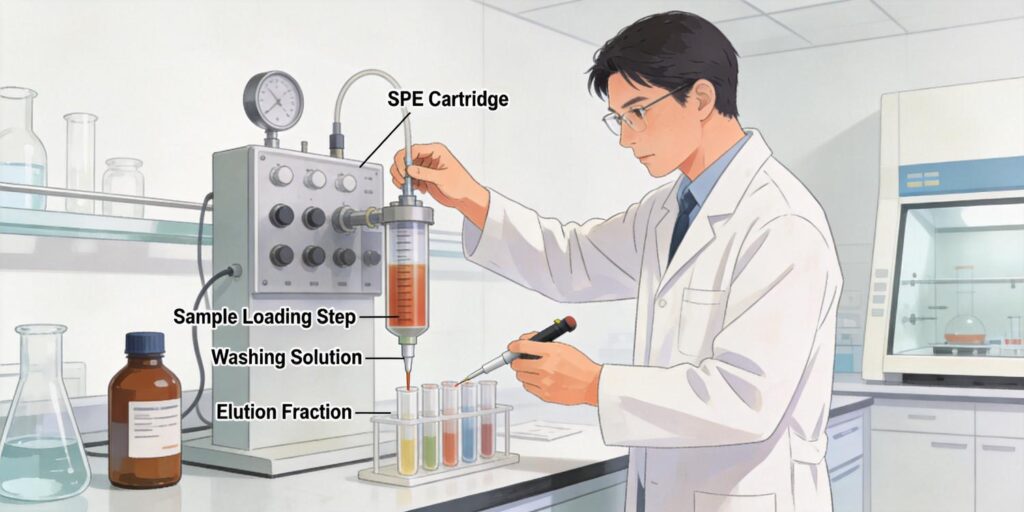
SPE

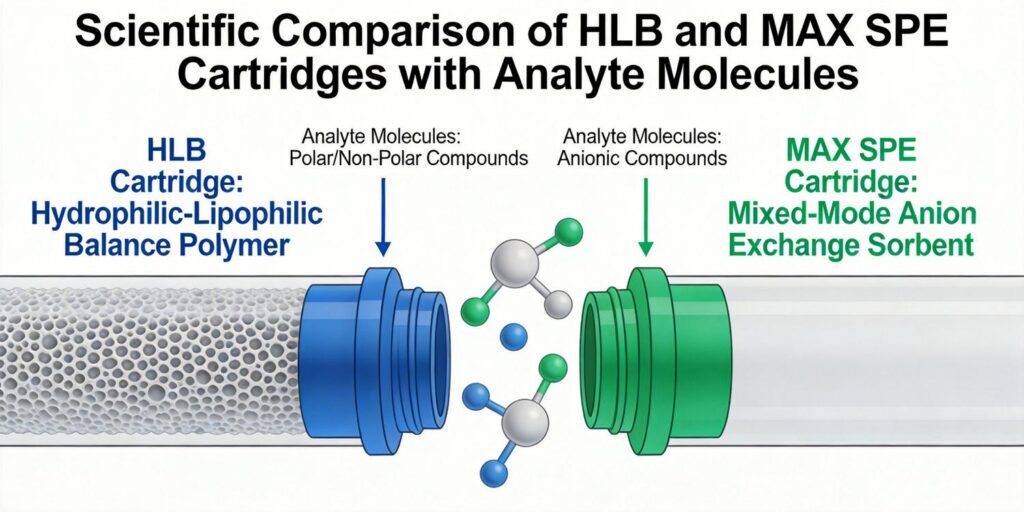
HLB SPE cartridge used for multi residue drug extraction

HLB SPE Method Development for Multi-Residue Drug Analysis

Typical Multi-Residue Drug Analysis Workflow in LC-MS Multi-residue drug analysis in LC-MS represents a critical challenge in modern analytical chemistry, requiring robust sample preparation methods to handle complex biological matrices. The typical workflow begins with sample collection and proceeds through several systematic steps to ensure accurate quantification of diverse pharmaceutical compounds. According to established protocols, […]

HLB SPE Method Development for Multi-Residue Drug Analysis Read More »

comparison diagram SPE vs LLE

Why SPE is Better Than Liquid-Liquid Extraction for Many Applications

1. Overview of Liquid-Liquid Extraction (LLE) Liquid-Liquid Extraction (LLE), also known as solvent extraction, is a traditional sample preparation technique that has been widely used for decades in analytical chemistry. The fundamental principle involves partitioning compounds between two immiscible liquid phases based on their relative solubilities. Typically, an aqueous sample is mixed with an organic

Why SPE is Better Than Liquid-Liquid Extraction for Many Applications Read More »

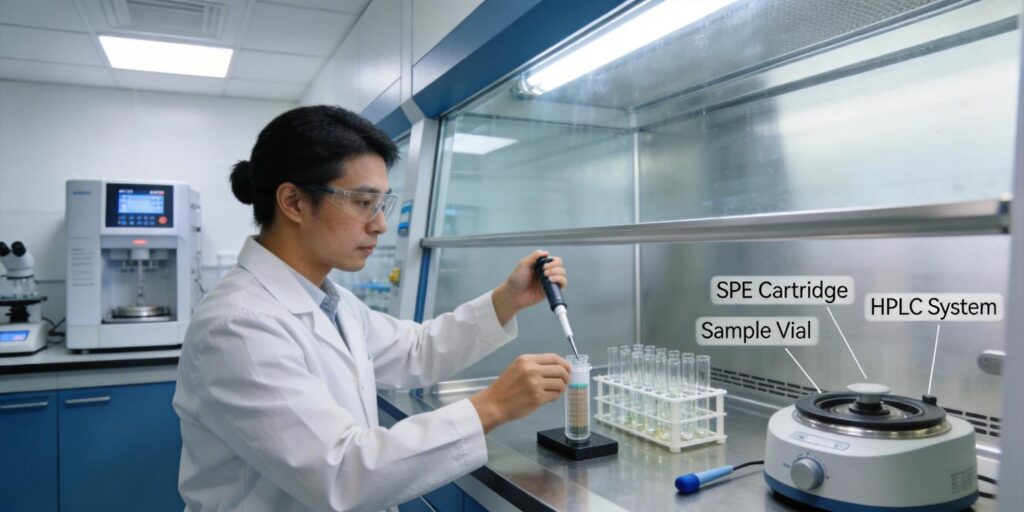
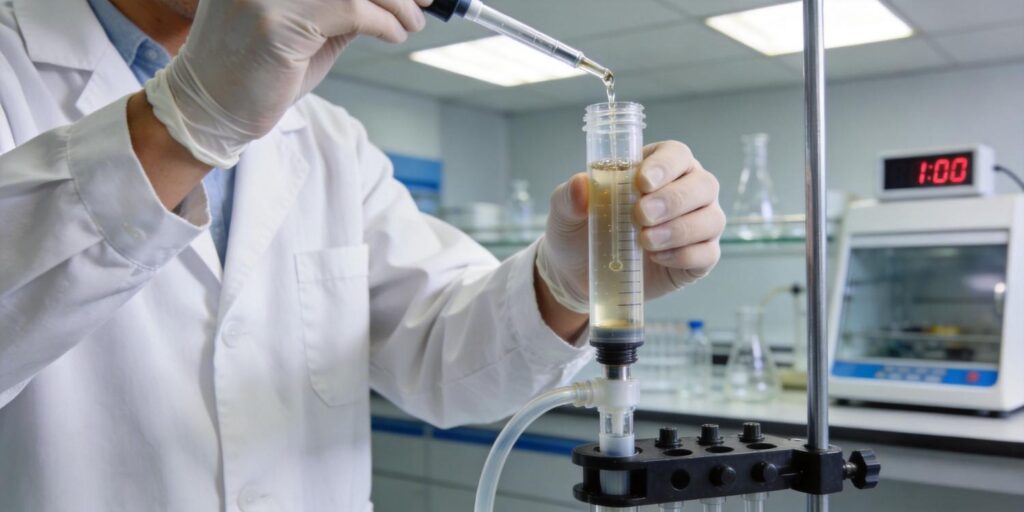
filtration and SPE comparison in lab

Sample Filtration vs SPE Cleanup

Filtration Basics: The First Line of Defense in Sample Preparation Filtration represents one of the most fundamental and widely used techniques in laboratory sample preparation. At its core, filtration involves the physical separation of particulate matter from a liquid matrix using a porous medium. This process relies on size exclusion principles, where particles larger than

Sample Filtration vs SPE Cleanup Read More »

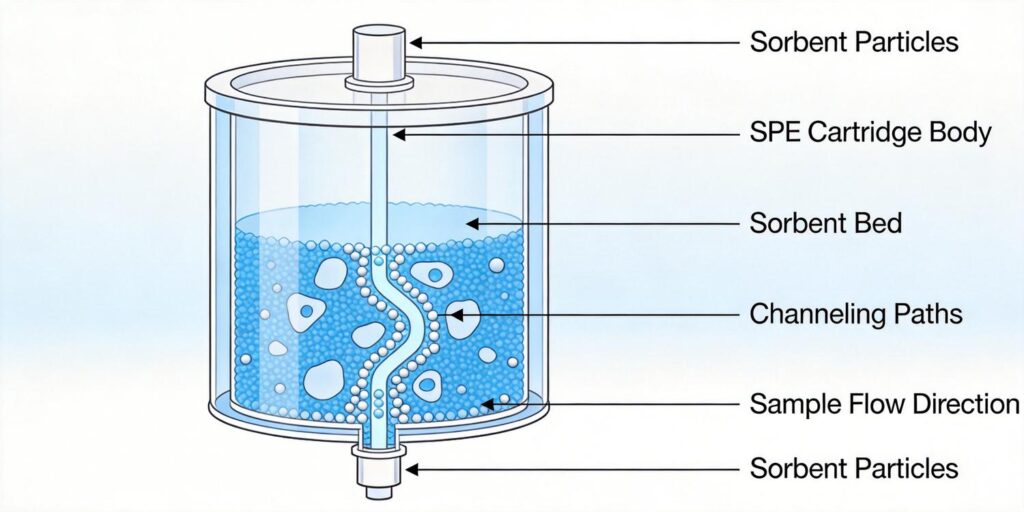
diagram showing channeling in SPE cartridge

SPE Cartridge Channeling: Causes and Solutions

What is Channeling in SPE Cartridges? Channeling in solid phase extraction (SPE) cartridges refers to the formation of tunnels or pathways through the sorbent bed where liquids flow preferentially, bypassing the majority of the stationary phase. This phenomenon occurs when excessive vacuum or pressure is applied during conditioning or sample loading steps, causing liquids to

SPE Cartridge Channeling: Causes and Solutions Read More »

diagram illustrating SPE breakthrough

Why SPE Breakthrough Happens and How to Prevent It

Understanding SPE Breakthrough: The Critical Phenomenon in Solid-Phase Extraction Solid-phase extraction (SPE) breakthrough represents one of the most significant challenges in analytical sample preparation, directly impacting method accuracy, precision, and overall analytical performance. As product manager at Poseidon Scientific, I’ve witnessed how breakthrough issues can compromise entire analytical workflows, leading to false negatives, inaccurate quantitation,

Why SPE Breakthrough Happens and How to Prevent It Read More »

laboratory troubleshooting SPE extraction

Troubleshooting Low Recovery in SPE

Common Causes of Low Recovery in SPE Low recovery in solid phase extraction (SPE) is one of the most frustrating challenges analytical chemists face. When your target analytes fail to appear in expected concentrations, it’s essential to systematically identify where the problem lies. According to forensic science literature, recovery problems in SPE can be categorized

Troubleshooting Low Recovery in SPE Read More »

elution of analytes from SPE cartridge

Elution Strategies for Solid Phase Extraction

Fundamentals of Elution Elution represents the critical final step in solid phase extraction (SPE) where retained analytes are selectively desorbed from the sorbent surface. This process involves creating conditions where the distribution coefficient (k’) between the analyte concentration on the solid surface and in the eluting liquid becomes very small, favoring analyte movement into the

Elution Strategies for Solid Phase Extraction Read More »

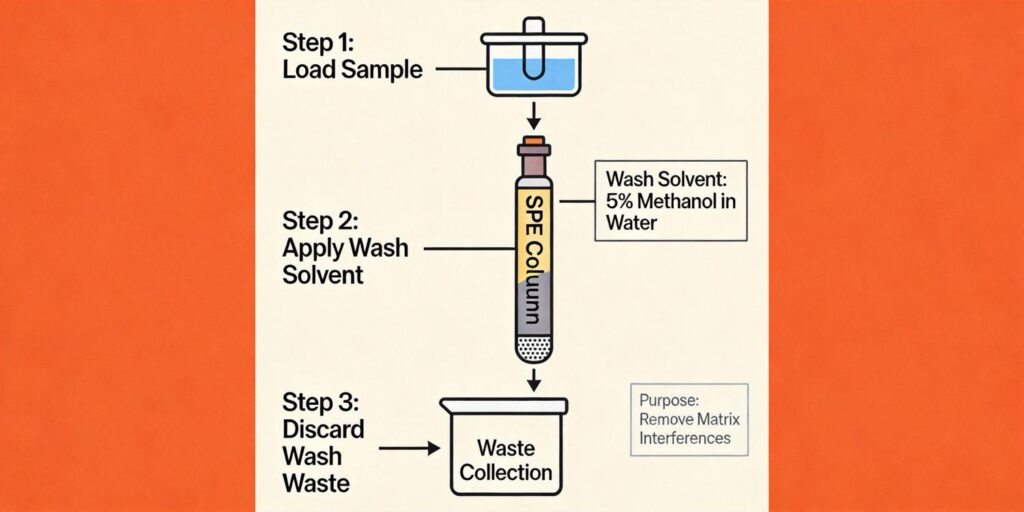
SPE wash step laboratory process

How to Optimize SPE Washing Steps

Purpose of Wash Step in SPE The wash step in solid-phase extraction (SPE) serves as a critical purification phase that bridges sample loading and analyte elution. According to established SPE principles, this step “removes excess sample matrix and unretained compounds” while selectively eliminating weakly bound interferences without displacing target analytes. The wash solvent acts as

How to Optimize SPE Washing Steps Read More »

SPE cartridge conditioning with solvent

SPE Cartridge Conditioning: Step-by-Step Guide

Purpose of Conditioning Solid phase extraction (SPE) cartridge conditioning is the critical first step in any SPE protocol, serving multiple essential functions that directly impact extraction efficiency and reproducibility. When silica particles are bonded with hydrophobic phases like C18 or C8, they become “waterproof” and must be conditioned to interact effectively with aqueous samples. The

SPE Cartridge Conditioning: Step-by-Step Guide Read More »

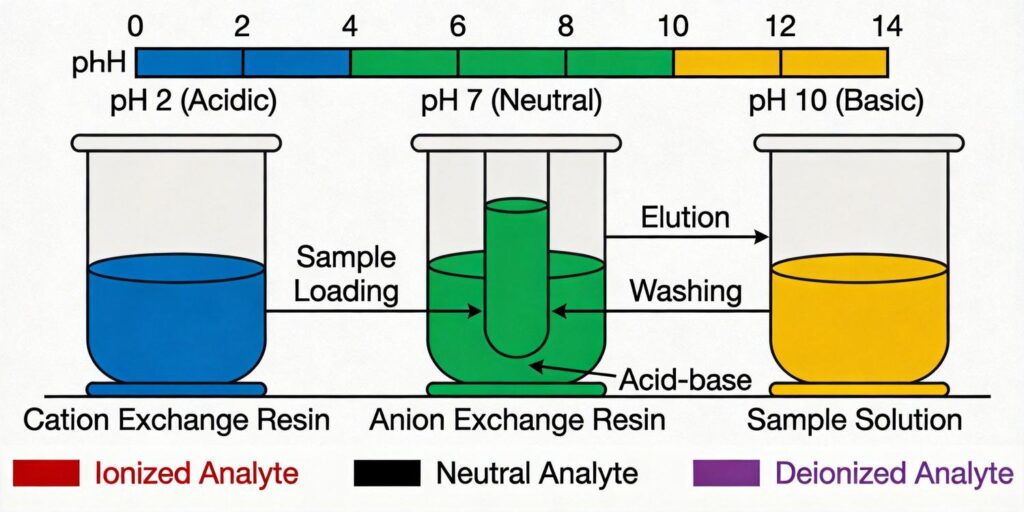
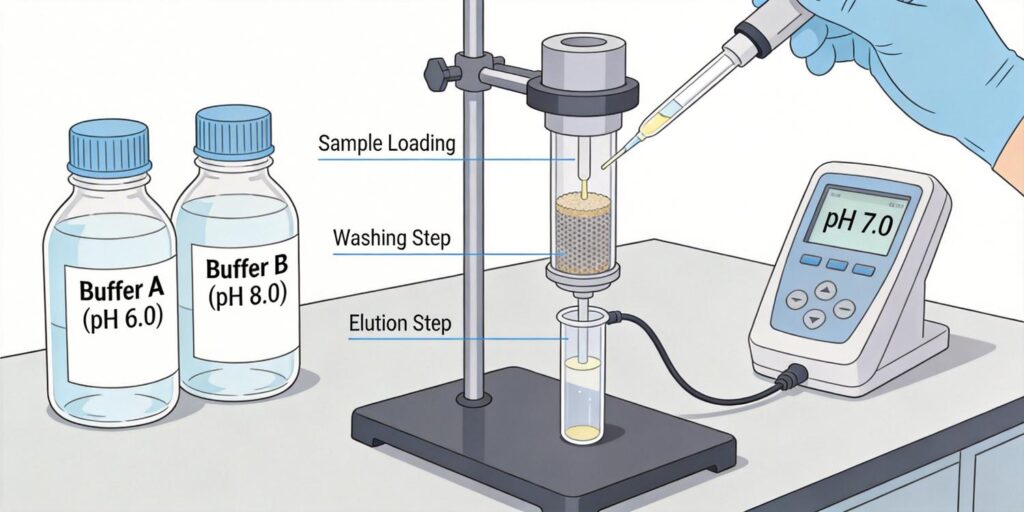
scientist adjusting sample pH before SPE extraction

Why Sample pH Matters in SPE Extraction

The Critical Role of pH in Solid Phase Extraction Success As a product manager at Poseidon Scientific specializing in SPE technologies, I’ve witnessed firsthand how pH optimization separates successful extractions from failed experiments. Sample pH isn’t just another parameter—it’s the master switch controlling analyte behavior, sorbent interactions, and ultimately, extraction efficiency. Whether you’re working with

Why Sample pH Matters in SPE Extraction Read More »

Shopping Cart
Poseidon Scientific
Privacy Overview

This website uses cookies so that we can provide you with the best user experience possible. Cookie information is stored in your browser and performs functions such as recognising you when you return to our website and helping our team to understand which sections of the website you find most interesting and useful.